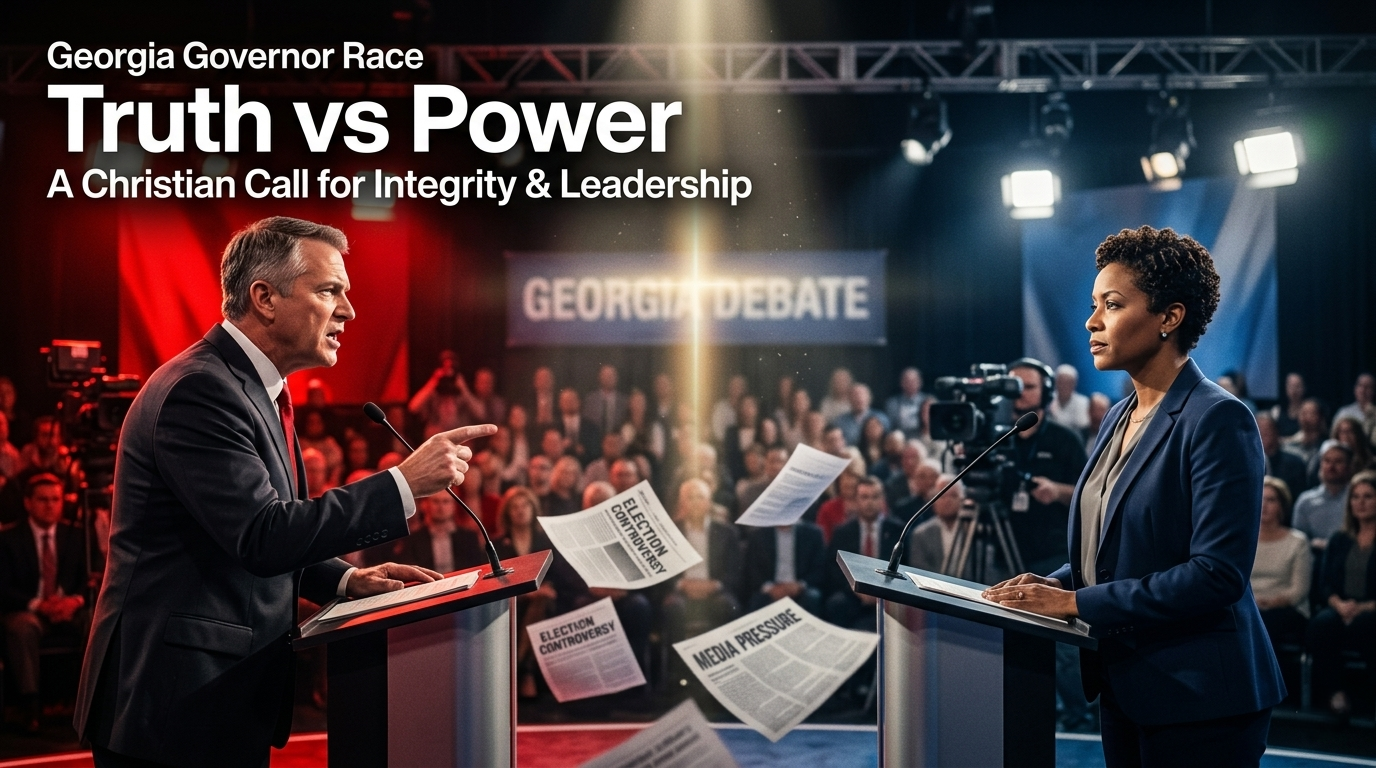
As Georgia’s Republican primary for governor intensifies, the escalating conflict between Lt. Gov. Burt Jones and businessman Rick Jackson is drawing attention not only for its political implications, but also for the tone and tactics shaping the race.
In recent days, the contest has taken a sharp turn. Jackson filed a defamation lawsuit in Fulton County, alleging that statements made by Jones’ campaign falsely tied him to controversial medical practices. Jackson’s legal team argues the claims were knowingly untrue and strategically timed to damage his reputation among conservative voters.
Jones’ campaign has not retreated from its messaging. Instead, it has continued to publicly criticize Jackson’s business record and political credibility, signaling that the race may grow even more contentious in the months ahead.
Alongside the personal accusations, a legal battle over campaign finance has further complicated the race. Jackson previously challenged a fundraising structure used by Jones, known as a leadership committee, which allowed the lieutenant governor to raise unlimited contributions. A federal judge has since temporarily blocked the committee from raising or spending funds tied to the 2026 campaign while the case proceeds.
The dispute has heightened scrutiny of both candidates, especially as early polling suggests a competitive race. Jones entered the contest with strong backing from Georgia Republicans and an endorsement from Donald Trump, while Jackson a political newcomer has pledged significant personal resources, reshaping the dynamics of the primary.
For many Christian observers, the developments raise important questions that go beyond politics. Scripture consistently emphasizes the value of truth, integrity, and godly character qualities that are often tested in the public arena.
Proverbs 12:22 teaches that the Lord delights in those who are trustworthy, while Proverbs 15:1 reminds believers that “a gentle answer turns away wrath.” In a race increasingly marked by sharp rhetoric and legal disputes, these principles offer a countercultural lens through which to evaluate both words and actions.
Christian leaders have long emphasized that political engagement should reflect biblical values, not mirror the hostility often seen in public discourse. While elections naturally involve debate and disagreement, the tone of that engagement matters. The way candidates speak about one another and how their supporters respond can either contribute to division or model a higher standard of respect.
The unfolding situation also serves as a reminder of the importance of discernment. Rather than reacting quickly to headlines or campaign claims, believers are encouraged to seek truth carefully, weigh evidence, and avoid spreading unverified information. Proverbs 18:17 highlights the need to hear both sides before forming conclusions.
At the same time, Scripture calls Christians to pray for those in authority, regardless of political alignment. As 1 Timothy 2:1-2 instructs, believers are to lift up leaders in prayer so that society may be marked by peace and godliness.
As Georgia’s gubernatorial race continues to develop, it stands as more than a political contest. For Christians, it is an opportunity to reflect on how faith shapes engagement with public life calling for truth over accusation, integrity over advantage, and humility over hostility.
In a divided political climate, that witness may matter just as much as the outcome itself.