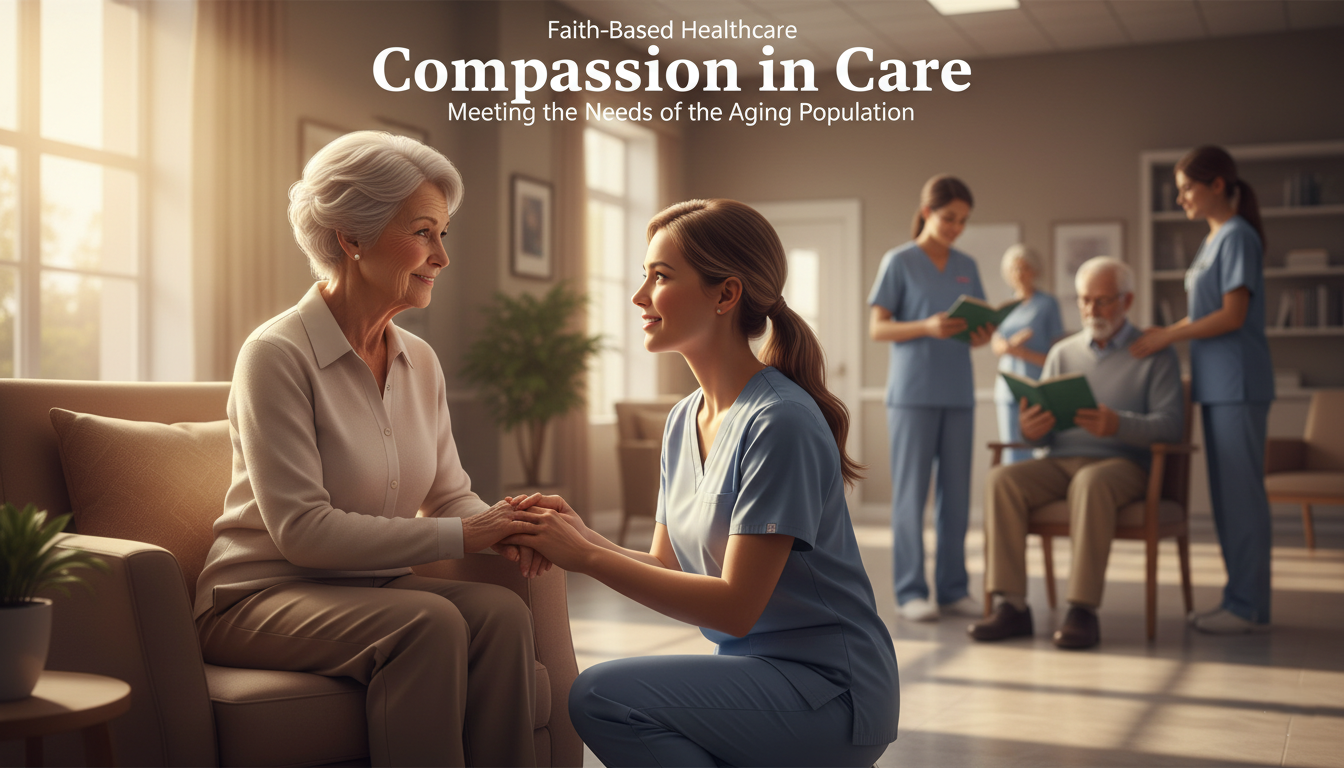
By Staff Writer | March 2026
As America’s senior population continues to grow, the demand for quality, compassionate healthcare is rising at an unprecedented rate. According to recent estimates, millions of adults over the age of 65 now rely on some form of in-home or long-term care a trend placing increased pressure on healthcare systems nationwide.
Amid these challenges, faith-based healthcare providers are stepping forward with a mission that goes beyond clinical treatment offering care rooted in compassion, dignity, and biblical values.
A Growing Need for Holistic Care
Healthcare professionals are seeing a shift in patient needs, particularly among the elderly. Beyond medical support, many seniors face loneliness, mobility limitations, and emotional hardship.
Faith-based organizations are responding by embracing a more holistic model of care one that addresses physical, emotional, and spiritual well-being.
“Healthcare is not just about treating conditions; it’s about caring for people,” said a regional home care director in the Atlanta area. “Our faith reminds us that every individual is created in God’s image and deserves to be treated with dignity.”
This belief is rooted in Genesis 1:27, which affirms that all people are made in the image of God a principle that shapes how caregivers approach their work.
Serving “The Least of These”
For many Christian healthcare providers, their work is seen as a direct response to the call of Christ.
In Matthew 25:40, Jesus teaches:
“Whatever you did for one of the least of these brothers and sisters of mine, you did for me.”
This passage has become a guiding principle for many in the field, influencing how care is delivered especially to vulnerable populations such as the elderly, disabled, and chronically ill.
Caregivers often go beyond their required duties, providing companionship, prayer, and emotional support alongside medical services.
Challenges Facing Faith-Based Providers
Despite their mission-driven approach, faith-based healthcare organizations face the same obstacles as the broader industry. Workforce shortages, rising costs, and complex regulatory requirements continue to create barriers.
Recruiting and retaining compassionate caregivers remains a significant challenge, as the demand for skilled workers outpaces supply.
Yet many leaders say their faith sustains them through these difficulties.
“Scripture reminds us in Galatians 6:9 not to grow weary in doing good,” one administrator noted. “That’s what keeps us going, even on the hardest days.”
A Distinct Approach to Care
What sets faith-based healthcare apart is not necessarily the services offered, but the spirit in which they are delivered.
Many organizations incorporate:
- Prayer (when welcomed by patients)
- Spiritual encouragement
- A culture of empathy and patience
These elements, while intangible, can have a profound impact on patient outcomes and overall well-being.
As the healthcare system continues to evolve, faith-based providers are playing a critical role in meeting the needs of an aging population. Their commitment to compassionate, Christ-centered care offers a powerful reminder that healing involves more than medicine it involves the heart.
In a system often driven by efficiency, these providers are demonstrating that faith and care can go hand in hand.