As Trump’s Gaza peace plan stalls over disagreements with Netanyahu, this is a Christian commentary on holding justice and mercy together, resisting political slogans, and praying for genuine peace.


The Middle East has once again become the center of international attention, but this time there’s a different tension developing behind the headlines. President Donald Trump is pushing for his Gaza peace plan to move forward. His administration has been working toward a 15-point roadmap that would require Hamas to disarm, Israeli forces to withdraw in stages, humanitarian assistance to increase, and eventually an international stabilization force to help establish security and reconstruction in Gaza. But Israeli Prime Minister Benjamin Netanyahu has rejected the current sequence of the proposal, insisting Israel will not withdraw or allow reconstruction until Hamas is completely disarmed.
That disagreement has placed the Trump administration and the Israeli government in an increasingly uncomfortable position. Trump’s son-in-law and envoy Jared Kushner spent nearly four hours with Netanyahu in Jerusalem in mid-August, according to NBC News and Axios, pressing him to “not create obstacles” in moving the plan forward. The two sides agreed only to form working groups on disarmament and on humanitarian issues like sanitation and clean water, without resolving the core disagreement over sequencing.
For Christians, this moment deserves more than a political reaction. It deserves prayer. It deserves discernment. And it requires us to remember that behind every political decision are human beings created in the image of God.
Christians should be careful when discussing Israel. For some believers, any criticism of Israel immediately feels like an attack against God’s purposes. For others, any defense of Israel is viewed as automatically supporting everything the Israeli government does. Neither approach gives us the full biblical picture.
The Bible teaches that God cares deeply about Israel. Scripture tells the story of God’s covenant relationship with Abraham and his descendants, and Paul writes extensively about Israel in Romans 9-11. But Scripture also makes something else very clear: God’s concern for Israel does not mean God stops caring about everyone else.
The God of the Bible isn’t only concerned about Jerusalem. He’s concerned about the stranger, the widow, the orphan, the poor, the oppressed, the foreigner, the innocent. Jesus repeatedly brought attention to people whom society had learned to overlook.
That means Christians can’t look at Gaza and see only a geopolitical argument. We have to see people, children, parents, families, people who are frightened, people who have lost homes, people who have lost loved ones. And yes, we must also remember Israeli families who have suffered violence, terror, displacement, fear and loss. A Christian response can’t be built on the idea that one population’s suffering matters while another population’s suffering doesn’t.
The current disagreement is significant because Trump’s administration isn’t simply talking about peace. It’s putting resources behind the effort. The United States has notified Congress that it plans to provide more than $206 million for a proposed International Stabilization Force for Gaza. Reuters reports that approximately $200 million would support equipment, infrastructure and operations, while another $6 million would help repurpose American armored vehicles.
That’s not a small gesture. It represents a serious commitment to the idea that Gaza eventually needs security, reconstruction and a political transition.
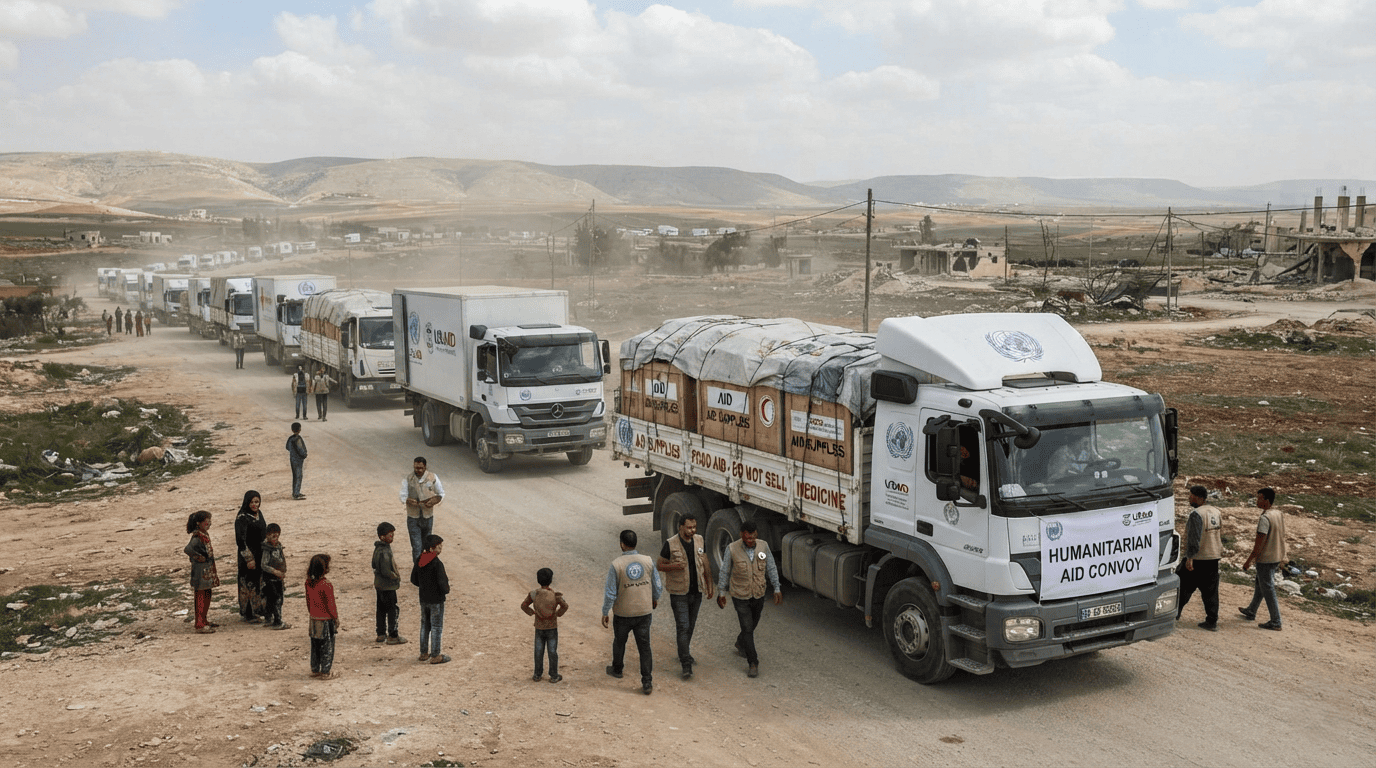
But the plan remains stuck. Hamas has said it agrees to Trump’s peace framework, but will only begin disarmament if Israel follows through on a sequenced withdrawal from Gaza at the same time. Israel wants Hamas completely disarmed before an Israeli withdrawal. Trump’s proposal has been built around Hamas disarming as Israeli forces withdraw.
That difference may sound like diplomatic language to someone sitting thousands of miles away. But in a war, the order of events can mean everything. Israel fears withdrawing before Hamas is completely disarmed could create another security threat. Palestinians and international mediators fear that continued Israeli military operations will prevent the peace process from actually becoming peace. Trump is attempting to push both sides toward a conclusion neither appears completely willing to accept.
This is where Christians need to slow down. Social media wants everything reduced to a sentence. “Support Israel.” “Free Palestine.” “Trump is saving the Middle East.” “Trump is betraying Israel.” “Israel is always right.” “Israel is always wrong.”
But Scripture doesn’t give us permission to turn complicated human suffering into slogans. Proverbs 18:13 warns against answering a matter before hearing it. We should listen. We should learn. We should examine the facts. And we should pray before allowing political loyalty to become more important than biblical truth.
A Christian can support Israel’s right to exist and defend itself while still believing innocent Palestinian lives must be protected. A Christian can care about Palestinian civilians while condemning Hamas terrorism. A Christian can respect President Trump while disagreeing with one of his policies. A Christian can support a peace initiative without pretending every detail of the plan is perfect. Faith requires that kind of maturity.
Jesus said in Matthew 5:9: “Blessed are the peacemakers.” Notice he didn’t say blessed are the people who win every argument. He said peacemakers. There’s a difference between wanting peace and wanting to win.
Peace is difficult because it often requires people to surrender something, power, pride, revenge, control, sometimes even political advantage. The Bible never portrays peace as weakness. Quite the opposite, peace requires courage.
Romans 12:18 tells believers, as far as it depends on them, to live peaceably with everyone. That doesn’t mean Christians ignore evil. It doesn’t mean justice doesn’t matter. It doesn’t mean governments have no responsibility to protect their citizens. It means Christians should never become so consumed with revenge that they forget the character of Christ.
Micah 6:8 gives the believer a simple but demanding instruction: Do justice. Love mercy. Walk humbly with God. Those three commands belong together. Justice without mercy can become cruelty. Mercy without justice can become indifference. And both without humility can become self-righteousness.
That’s one of the greatest dangers in talking about Gaza, Israel and Trump. Everyone has an opinion, a side, a reason. But Christians are called to something deeper than choosing the loudest side. We’re called to walk with God. That means asking: Are we seeking justice? Are we showing mercy? Are we telling the truth? Are we praying for our enemies? Are we grieving human suffering even when the victims belong to a group we disagree with? Are we willing to correct our own side when our own side is wrong?
Those questions are harder than political slogans. But they’re closer to discipleship.
The current tension between Trump and Netanyahu also reminds us of something Christians should never forget: political leaders are not saviors. Not Trump. Not Netanyahu. Not any president, prime minister, or party.
The Bible repeatedly shows the limitations of human government. Kings rise, kings fall. Empires expand, empires collapse. Political alliances change. But God’s authority doesn’t. Christians can participate in politics without placing their ultimate hope in politics. That distinction is desperately needed right now.
If Trump succeeds in bringing peace to Gaza, Christians should be grateful for peace. If negotiations fail, Christians should keep praying, whether it’s Israel’s position that shifts, Hamas’s, or American policy. Because our confidence can’t ultimately rest in Washington, Jerusalem, or Gaza City. Our hope is in Christ.
Recent reports from Gaza show violence continuing even as diplomats work toward a political solution. On August 20, Turkey, Egypt and Qatar condemned recent Israeli strikes and said they were undermining efforts to end the conflict.
That should disturb us, not because Christians are supposed to adopt somebody else’s political talking points, but because human suffering should disturb anyone who claims to follow Jesus.
Jesus looked at suffering differently than the world often does. He didn’t treat people as numbers. He saw the person, the blind man, the leper, the woman at the well, the widow, the grieving family, the hungry crowd, the person everyone else had already decided was unworthy. That should shape how Christians look at Gaza. Not through the lens of tribalism. Through the eyes of Christ.
Pray for Israel, for Israeli families, for hostages and their families, for soldiers and leaders, for wisdom and protection, for the people of Jerusalem.
But prayer shouldn’t stop there. Pray for Palestinians, for children, for those who’ve lost their homes, for those who are hungry, for medical workers and humanitarian organizations, for Palestinian leaders, for people who want peace but have little influence over the decisions made around them, for those trapped between armed groups and governments. They need God too.
Pray for Trump. Whatever a Christian thinks about him politically, the Bible tells us to pray for those who hold authority, that he’d have wisdom, that he’d pursue what’s right rather than simply what’s politically advantageous, that his administration would make decisions protecting innocent life, that he’d have the courage to pursue genuine peace even when peace becomes politically expensive. Pray for everyone advising him.
The same goes for Netanyahu. Pray for Israel’s leadership, for wisdom, for restraint when restraint is needed, for courage when courage is required, for the ability to distinguish between legitimate security concerns and actions that create unnecessary suffering. Leadership carries enormous responsibility, and Scripture reminds us that leaders answer to God just like everyone else.
There’s another warning Christians need to hear. Every time conflict intensifies in Israel, somebody begins announcing that the end has arrived. We should be careful. Jesus himself warned his followers not to be deceived. Christians should know biblical prophecy, but we shouldn’t turn every breaking-news notification into a prophecy chart.
The Middle East matters biblically. Jerusalem matters biblically. Israel matters biblically. But that doesn’t give us permission to claim certainty where Scripture hasn’t given us certainty. Our job isn’t to predict tomorrow. Our job is to remain faithful today.
The Trump administration appears determined to keep pushing the Gaza peace plan. The United States has already committed substantial funding toward the proposed stabilization force. Trump’s representatives have met with regional mediators and Hamas representatives, while Kushner also met with Netanyahu, but those talks ended without a breakthrough. Meanwhile, Israel maintains that reconstruction can’t properly move forward until Hamas is disarmed, while regional mediators continue pressing for a ceasefire and an end to military operations.
So the immediate future remains uncertain. And perhaps that’s exactly why Christians need to pray now, not after everything is solved. Now.
I don’t believe Christians are called to choose between compassion for Israelis and compassion for Palestinians. We’re called to love people.
I don’t believe supporting Israel requires Christians to defend every action taken by an Israeli government. And I don’t believe compassion for Palestinians requires Christians to excuse terrorism.
We can condemn Hamas terrorism. We can acknowledge Israel’s security concerns. We can mourn Israeli lives. We can mourn Palestinian lives. We can support legitimate efforts to protect civilians. We can demand justice. We can pray for peace. And we can refuse to let hatred become our language.
Because at the center of Christianity is not a political party. It’s a person. Jesus Christ. The Christian’s responsibility in this moment isn’t merely to ask, “Whose side am I on?” The deeper question is: “Am I standing on the side of truth, justice, mercy and righteousness?”
That question cuts across political parties. Across national borders. Across ethnicity. Across religion. And ultimately, it brings us back to Scripture.
“Blessed are the peacemakers: for they shall be called the children of God.” – Matthew 5:9
The world is watching Trump. The world is watching Israel. The world is watching Gaza. But Christians should remember something else: God is watching all of us. And while politicians negotiate, soldiers fight, diplomats argue and headlines change by the hour, the Church still has a responsibility: Pray. Speak truth. Show mercy. Pursue justice. Refuse hatred. And keep our eyes on Christ.
“Blessed are the peacemakers: for they shall be called the children of God.” Matthew 5:9
This article is a Christian commentary on current events. Biblical interpretation and personal perspective are presented as commentary, while reported events are attributed to the linked news sources.
Walking through faith and culture together. At Faith Focus Journal, we explore international affairs, peace, and faith through the lens of Scripture. Have a thought on faith and global conflict? Reach out through our contact page. We would love to hear from you.