Lab-grown meat is moving from scientific research toward an emerging regulated marketplace. Christians can examine its promises and uncertainties through biblical wisdom, stewardship and discernment.

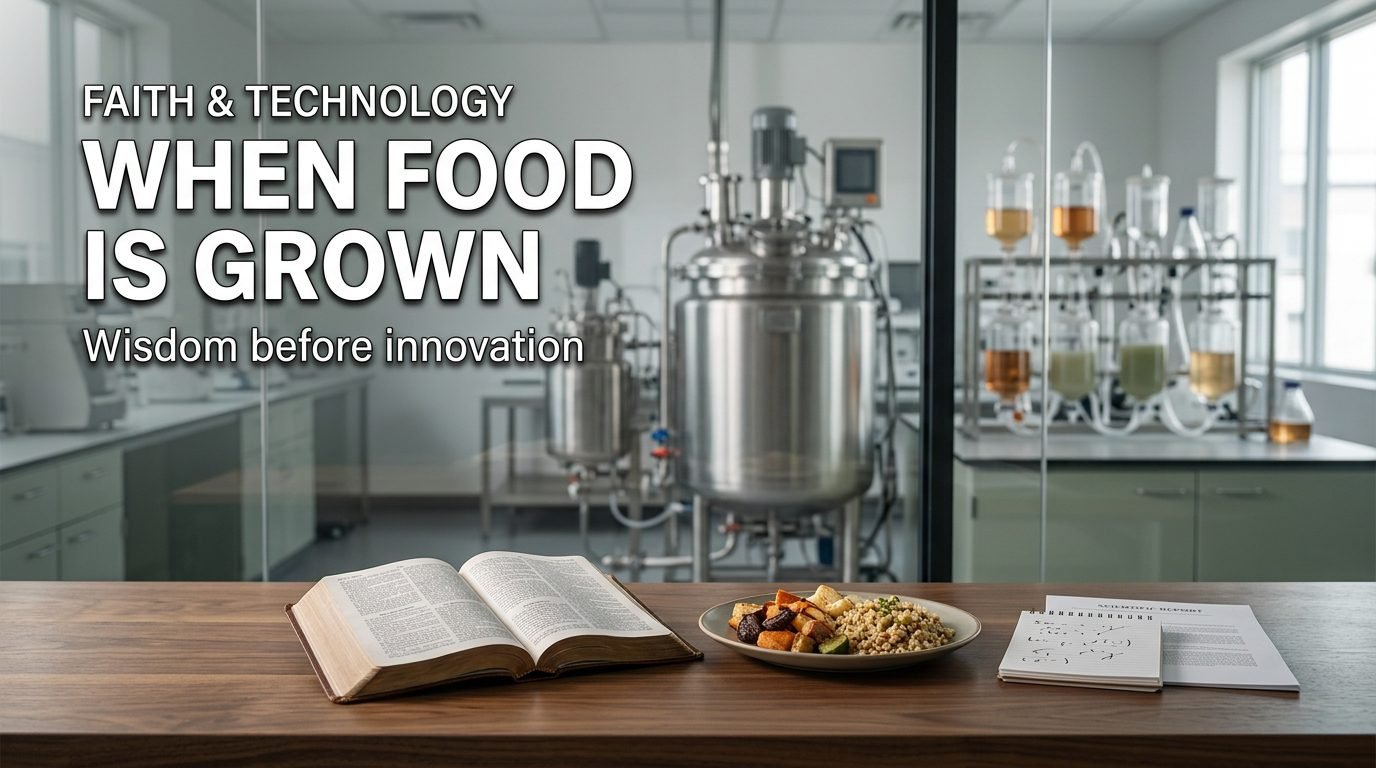
Lab-grown meat is moving from a futuristic scientific concept toward a developing food industry, raising questions about how technology could reshape the way people produce and consume meat.
Also called cultivated meat or cell-cultured meat, the technology uses animal cells grown in controlled environments rather than raising an entire animal for slaughter. Researchers and companies continue to investigate its potential benefits, including possible changes in land use, animal welfare and resource consumption. At the same time, important questions remain about production costs, scalability, nutrition, energy requirements and long-term effects.
For Christians, the conversation should not begin with excitement over everything humanity can create or fear of everything that is unfamiliar.
It should begin with wisdom.
The Bible does not specifically address cultivated meat. Scripture does, however, repeatedly teach believers how to approach knowledge, human innovation and decisions requiring discernment.
“The fear of the LORD is the beginning of wisdom.” — Proverbs 9:10
Cultivated meat remains a developing industry, but the technology has moved beyond pure laboratory research and into an emerging regulated marketplace.
In the United States, human food made from cultured cells of livestock and poultry is subject to regulatory oversight shared by the Food and Drug Administration and the U.S. Department of Agriculture’s Food Safety and Inspection Service. The FDA oversees areas including cell collection, cell banking, growth and differentiation. Oversight transitions to USDA-FSIS at the harvesting stage for applicable livestock and poultry products, with USDA overseeing further processing and labeling.
The FDA maintains an inventory of completed pre-market consultations for food made from cultured animal cells. The inventory includes cultured chicken, pork fat and salmon cell materials, among other products.
Those consultations are significant, but they should not be confused with proof that cultivated meat has become a routine part of the American food supply.
The FDA describes cultured-animal-cell food as an emerging area of food science and notes that manufacturers are still working to scale production consistently enough to compete on price.
That distinction matters.
Regulatory review can address food-safety requirements, but broader questions about commercial scale, affordability, environmental impact and consumer acceptance remain part of the developing discussion.
For Christians, that means the technology deserves neither automatic rejection nor automatic celebration.
Humanity’s ability to develop new technologies has grown significantly.
But technological capability is not the same as wisdom.
Knowledge can explain how something works. It can help scientists develop new possibilities and help society understand potential outcomes.
Yet knowledge alone cannot determine whether every new capability should immediately be embraced.
When humanity gains the ability to change how food is produced, humility requires recognizing that the ability to act does not guarantee the ability to foresee every consequence.
James 1:5 says:
“If any of you lacks wisdom, let him ask God, who gives generously to all without reproach.”
Scientific research and human expertise can provide valuable information.
But Christians should not treat governments, corporations, scientists or cultural trends as the ultimate source of direction.
Human understanding has limits.
The Christian response, therefore, is not to reject knowledge.
It is to seek God’s wisdom while carefully considering what human knowledge can reveal.
One important question surrounding cultivated meat is not simply whether it can be produced.
It is whether society should move toward widespread adoption before important questions have been adequately answered.
Throughout history, new technologies have often been presented as evidence of progress.
But progress should not be defined merely by humanity’s ability to do something new.
First Corinthians 10:23 says:
“All things are lawful,” but not all things are helpful.
The passage addresses Christian liberty, not food technology specifically. Yet it illustrates a broader biblical principle: possibility and wisdom are not always the same thing.
Christians can therefore ask legitimate questions about cultivated meat without being opposed to science.
What are the long-term implications for human health?
How transparent are the ingredients and production processes?
Can the industry scale efficiently?
What are the actual environmental effects when production moves beyond laboratory or pilot settings?
Could the industry become concentrated among a relatively small number of corporations?
And what might change in communities and agricultural systems if cultivated meat becomes substantially more widespread?
These are not necessarily questions of fear.
They are questions of stewardship and discernment.
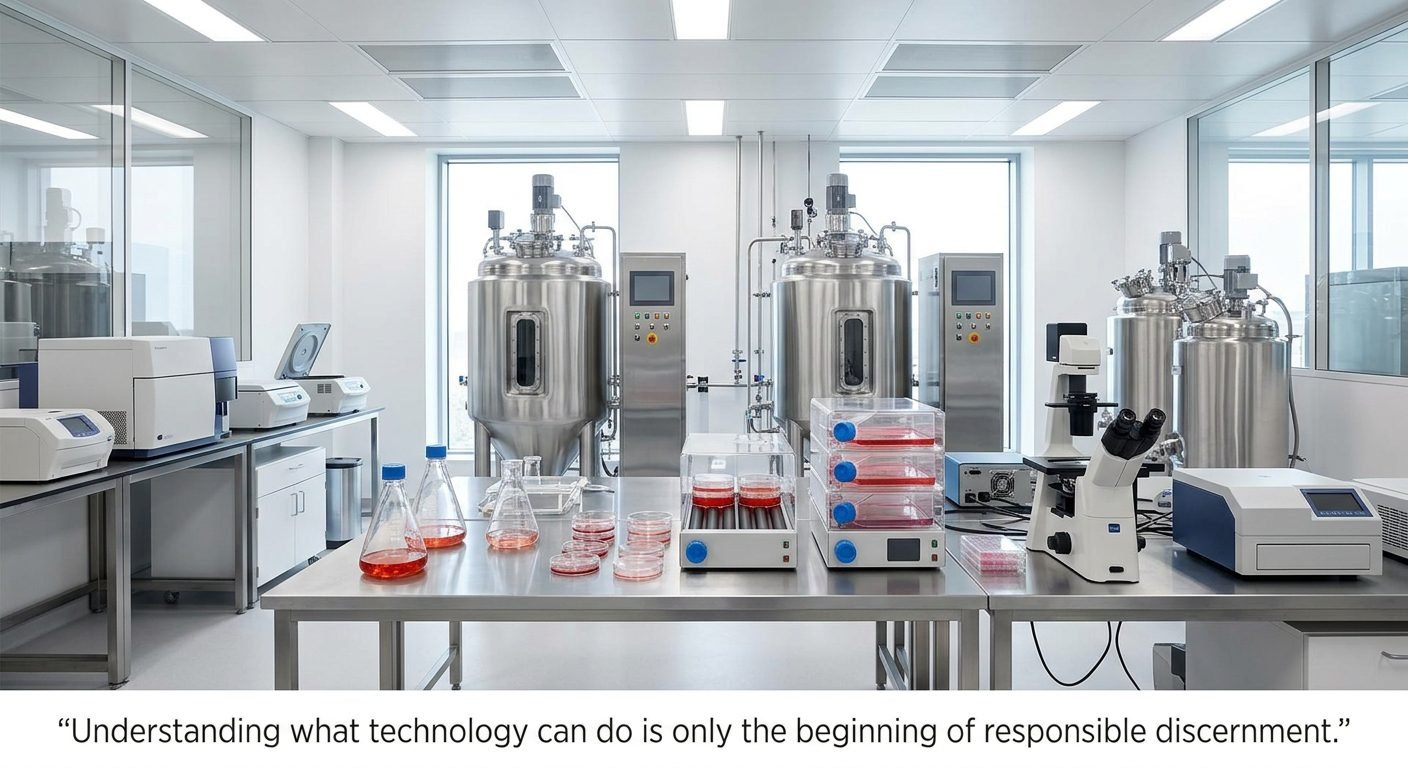
Cultivated meat is still a developing technology.
Researchers continue to examine its nutritional characteristics, production methods, environmental effects, scalability and potential health implications.
Recent scientific reviews have reached different conclusions about its potential environmental advantages, but they consistently point to important uncertainties. One 2025 review found that cultivated meat could reduce land use and potentially other environmental pressures, while noting that energy requirements and the source of that energy are critical to its overall environmental impact.
Another 2025 review cautioned that some sustainability claims have been overly ambitious and that important nutritional and environmental knowledge gaps remain.
A 2025 mini-review likewise noted that human clinical evidence regarding the health effects of consuming cultivated meat remains limited and that many sustainability claims depend on assumptions about future production systems and energy sources.
That means Christians should be careful in both directions.
They should not claim that cultivated meat is inherently harmful when the evidence does not establish such a conclusion.
But neither should they feel obligated to accept every claim about the technology simply because it is presented as innovative or sustainable.
Wisdom allows believers to acknowledge uncertainty.
And when human understanding is incomplete, Christians are called to seek more than information.
They are called to seek God.
Proverbs 2:6 says:
“For the LORD gives wisdom; from his mouth come knowledge and understanding.”
Scientists may provide research.
Companies may describe potential benefits.
Government agencies may establish standards.
Critics may raise concerns.
Each source may contribute valuable information.
But information is not the same as wisdom.
When important questions remain unanswered, patience can be an expression of wisdom.
In a culture that often rewards speed and early adoption, Christians are not required to be among the first to embrace every new technology.
Proverbs 19:2 warns against acting hastily.
Slowing down does not mean refusing to learn or rejecting science.
It means allowing time for claims to be tested, research to develop and promises to be examined.
Christians can continue learning while also praying for discernment and waiting for greater clarity.
Sometimes wisdom does not require an immediate “yes.”
Sometimes wisdom does not require an immediate “no.”
Sometimes wisdom says:
Wait.

The discussion surrounding cultivated meat also raises questions about stewardship.
Genesis 2:15 says that God placed man in the garden “to work it and keep it.”
Humanity has therefore been given a responsibility to care for creation.
Supporters of cultivated meat often point to potential environmental benefits. Those claims deserve careful examination, especially because the environmental impact of large-scale cultivated-meat production can depend heavily on energy sources and production methods.
Christians should not assume that stewardship automatically means adopting the newest technological solution.
Nor should they assume that preserving traditional methods automatically represents the best form of stewardship.
Biblical stewardship requires something deeper: faithfully managing what God has entrusted to humanity.
Psalm 24:1 declares:
“The earth is the LORD’s and the fullness thereof.”
Because creation belongs to God, Christians should approach decisions about food production with humility.
The goal should not simply be greater efficiency, greater profit or greater technological control.
The goal should be responsible stewardship that honors God and considers the consequences for people, communities and creation.
The Bible presents food as part of God’s provision and frequently connects meals with fellowship, thanksgiving and dependence upon Him.
However, Christians should avoid creating biblical rules where Scripture has not spoken directly.
The Bible does not declare that conventionally produced meat is inherently more spiritual than cultivated meat.
It also does not specifically condemn food produced through modern cellular technology.
Yet Christians still have a responsibility to consider what they consume.
First Corinthians 10:31 says:
“So, whether you eat or drink, or whatever you do, do all to the glory of God.”
That principle encourages believers to think beyond convenience and novelty.
Christians can consider questions about nutritional quality, ingredients, transparency, food safety and long-term effects without assuming the answer before the evidence is available.
A responsible approach is neither unquestioning acceptance nor automatic rejection.
It is careful discernment.
One of the deeper concerns surrounding any major technological advancement is the temptation to place excessive confidence in human ability.
Technology can be useful.
Scientific knowledge can help solve real problems.
Innovation can provide valuable tools.
But none of these things should become substitutes for wisdom or trust in God.
Ecclesiastes 7:12 says:
“Wisdom preserves the life of him who has it.”
Human knowledge can give people new capabilities.
Wisdom helps determine how those capabilities should be used.
Christians should therefore be cautious about a cultural mindset that assumes the newest technology automatically represents the best future.
The Bible does not call believers to worship the past.
But neither does it call them to worship progress.
Romans 12:2 instructs Christians to renew their minds so they may discern what is good and pleasing to God.
That means believers should evaluate technological progress rather than simply being carried along by it.
The Christian response to cultivated meat should avoid two extremes.
The first is fear.
Christians should not spread unsupported claims or declare that cultivated meat is inherently sinful or dangerous simply because it is unfamiliar.
The second is blind acceptance.
Christians are not required to embrace a new technology simply because it is marketed as innovative, sustainable or inevitable.
First Thessalonians 5:21 provides a balanced approach:
“Test everything; hold fast what is good.”
Testing requires patience, honesty and a willingness to hear different perspectives.
And above all, it requires humility.
Proverbs 3:7 warns believers not to be wise in their own eyes.
That warning applies not only to those who reject innovation without evidence, but also to those who assume human ingenuity will always provide the best solution.
Christian discernment leaves room for both caution and curiosity.
The discussion surrounding cultivated meat ultimately raises a deeper question about trust.
Where does humanity place its confidence?
Jesus taught His followers not to live in anxiety over food and material needs but to trust their heavenly Father.
Matthew 6:31-33 calls believers to seek first God’s kingdom and trust Him with their needs.
Technology may help produce food.
Agriculture requires human work.
Science can expand knowledge.
But God remains the ultimate provider.
Christians should therefore avoid both extremes: fearing technological change as though God has lost control of the future or placing their hope in technology as though humanity can engineer its way beyond the need for God.
God is the provider. Humanity is the steward. Technology is the tool.
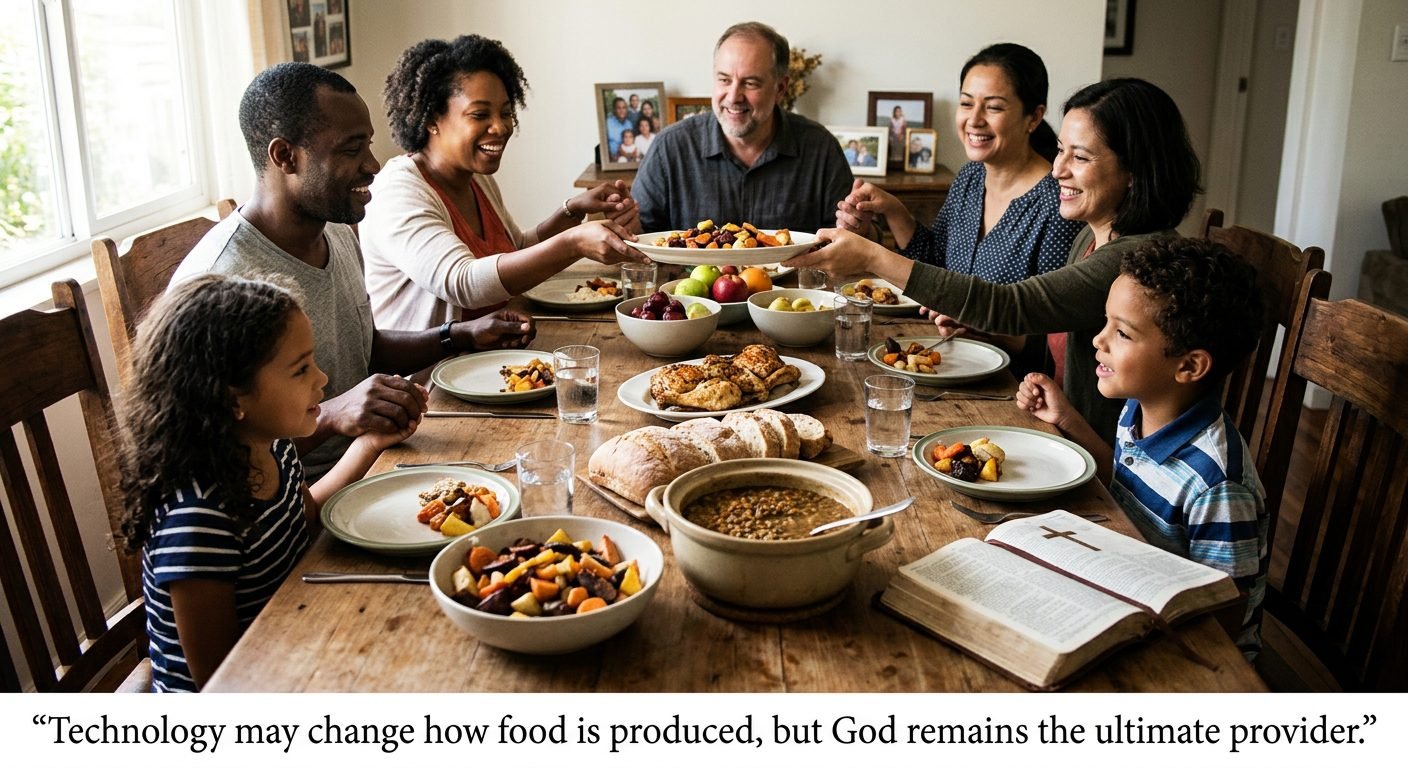
Lab-grown meat may become an increasingly visible part of the future food system.
Whether it eventually becomes widely embraced or remains limited in its use, Christians should approach it with thoughtful discernment.
They should seek reliable information.
They should examine claims carefully.
They should consider questions about health, transparency, stewardship, corporate concentration and long-term consequences.
But they should not stop with human knowledge.
They should seek the wisdom of God.
Proverbs 1:7 says:
“The fear of the LORD is the beginning of knowledge; fools despise wisdom and instruction.”
The Christian response to lab-grown meat should not be driven by fear of technology.
Nor should it be driven by fascination with innovation.
It should be guided by the fear of the Lord.
The question is not simply whether humanity has gained the knowledge to create a new kind of food.
The deeper question is whether humanity has sought the wisdom to know how and whether it should be embraced.
Knowledge may tell us what we are capable of doing.
Godly wisdom helps us discern what should be done.
And when important questions remain unanswered, Christians do not have to rush.
They can seek the Lord.
They can examine the evidence.
They can pray for wisdom.
And they can wait.
In a rapidly changing world, the newest solution is not always the wisest one.
Christians are called not simply to follow what humanity can create, but to seek the God who gives wisdom.
“If any of you lacks wisdom, let him ask God, who gives generously to all without reproach.” — James 1:5
Lab-grown meat, also called cultivated or cell-cultured meat, is produced by growing animal cells in controlled environments rather than raising an entire animal for slaughter.
Cultivated animal-cell foods are subject to U.S. regulatory oversight. The FDA handles specific stages of production, while USDA-FSIS shares jurisdiction over applicable livestock and poultry products. The FDA has completed pre-market consultations for several cultured-cell food products.
No. The Bible was written long before this technology existed. Christians therefore should avoid claiming that Scripture directly approves or condemns cultivated meat. Instead, biblical principles of wisdom, stewardship, gratitude and discernment can guide how believers think about it.
The answer is not settled across all production systems. Research suggests cultivated meat could reduce land use and potentially other environmental impacts, but energy requirements, production methods and the source of energy can substantially affect the result.
Christians can learn about the technology, examine evidence, consider health and stewardship questions, avoid unsupported claims and pray for wisdom. They do not need to respond with either blind acceptance or automatic fear.
Walking through faith and culture together. At Faith Focus Journal, we explore science, technology and cultural change through the lens of Scripture. As the world develops new technologies, Christians can pursue knowledge while seeking the wisdom that comes from God. Reach out through our contact page We would love to hear from you.