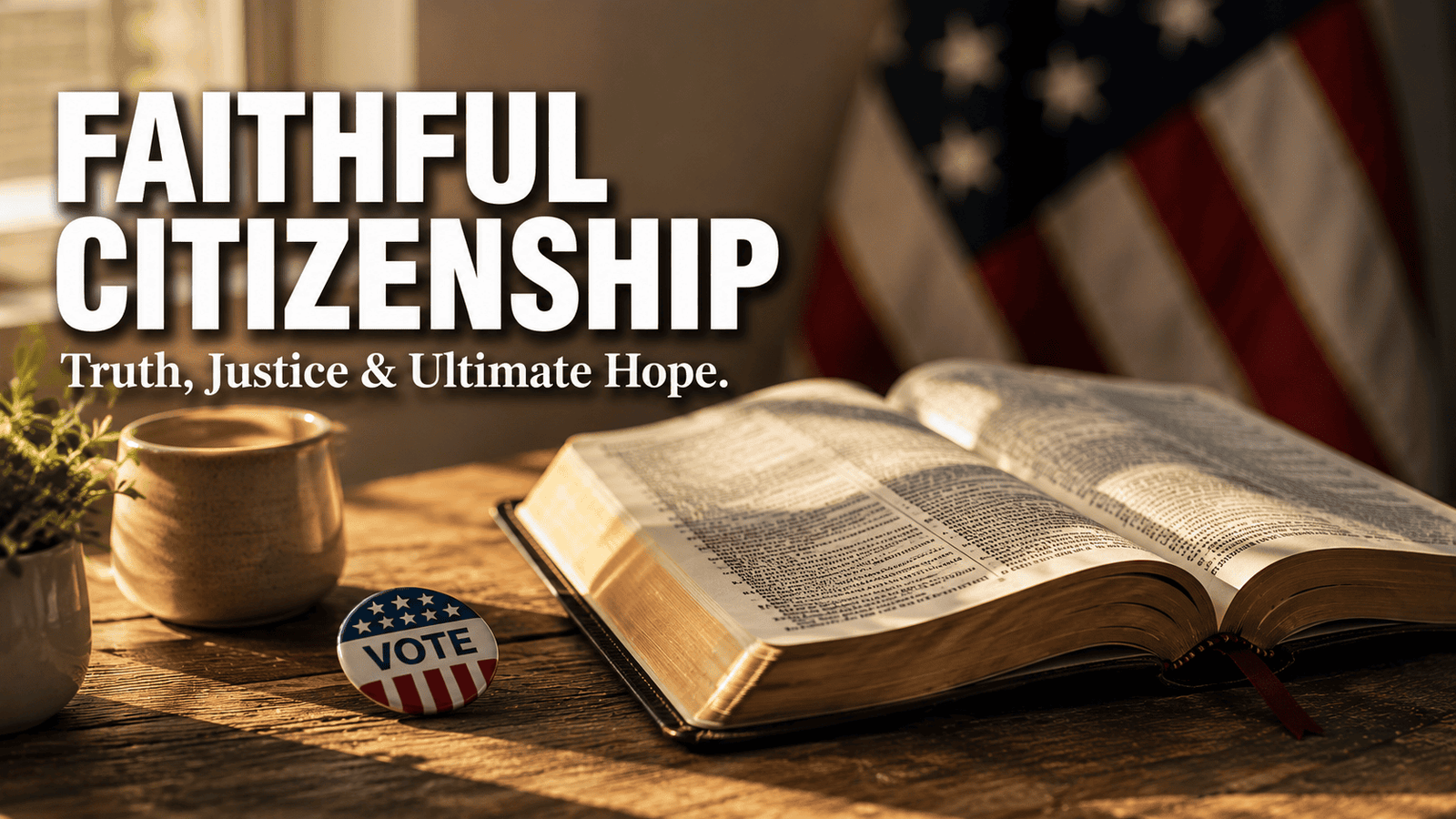
As America enters another intense election season, this is a Christian reflection on faithful citizenship, truth, justice, mercy, and remembering that our deepest allegiance belongs to Christ.

By London Brown
America is entering another intense election season. Candidates are making promises, parties are building coalitions, and voters are trying to decide which voices deserve their confidence. The arguments will be loud, the advertisements will be carefully produced, and social media will reward the most emotional message rather than the most truthful one.
For Christians, however, an election is never only a contest for power. It is also an opportunity to examine the condition of our own hearts. What happens when political loyalty becomes stronger than loyalty to Christ? What happens when winning becomes more important than honesty, justice, humility, or compassion? These questions matter because public life reveals not only what leaders want, but also what citizens are willing to excuse.
The Bible does not tell Christians to withdraw from society. It does call us to live differently within it. We are citizens of a particular country, but our deepest identity is found in Christ. Paul reminded believers that “our citizenship is in heaven” (Philippians 3:20). That truth should not make Christians indifferent to public affairs. It should make our participation more honest, more courageous, and less controlled by fear.
Political parties can identify important problems and propose useful solutions. They can also make serious mistakes, protect their own interests, and become captive to anger or ambition. No party is the Church, and no politician is the Savior. The kingdom of God is greater than the boundaries of any nation or the platform of any political organization.
Jesus did not promise that a government would establish the kingdom of God. When questioned about political authority, He declared, “My kingdom is not of this world” (John 18:36). His statement did not mean that earthly life is unimportant. It meant that the reign of Christ cannot be reduced to a campaign, a government program, or a national identity.
Christians therefore need to be careful when political language begins to sound like religious language. A candidate may speak about faith and still act dishonestly. A party may defend one important moral concern while neglecting another. A movement may promise national renewal while encouraging contempt for neighbors.
Christian discernment requires more than asking whether a candidate uses familiar religious words. It asks whether a person’s conduct demonstrates truthfulness, self-control, justice, humility, and concern for others. Jesus taught that a tree is known by its fruit (Matthew 7:15-20). That principle applies to leaders across the political spectrum. Christians should not demand integrity from opponents while excusing corruption in their allies.
Scripture gives no single modern political platform, but it gives enduring moral standards. Leaders should exercise authority for the good of the people rather than for personal glory. Citizens should evaluate public decisions honestly rather than repeating whatever strengthens their preferred side.
Micah’s words remain a useful guide: God requires His people to “act justly,” “love mercy,” and “walk humbly” with Him (Micah 6:8). These are not slogans reserved for one party. They are obligations that apply to every Christian and should shape the way Christians assess every candidate.
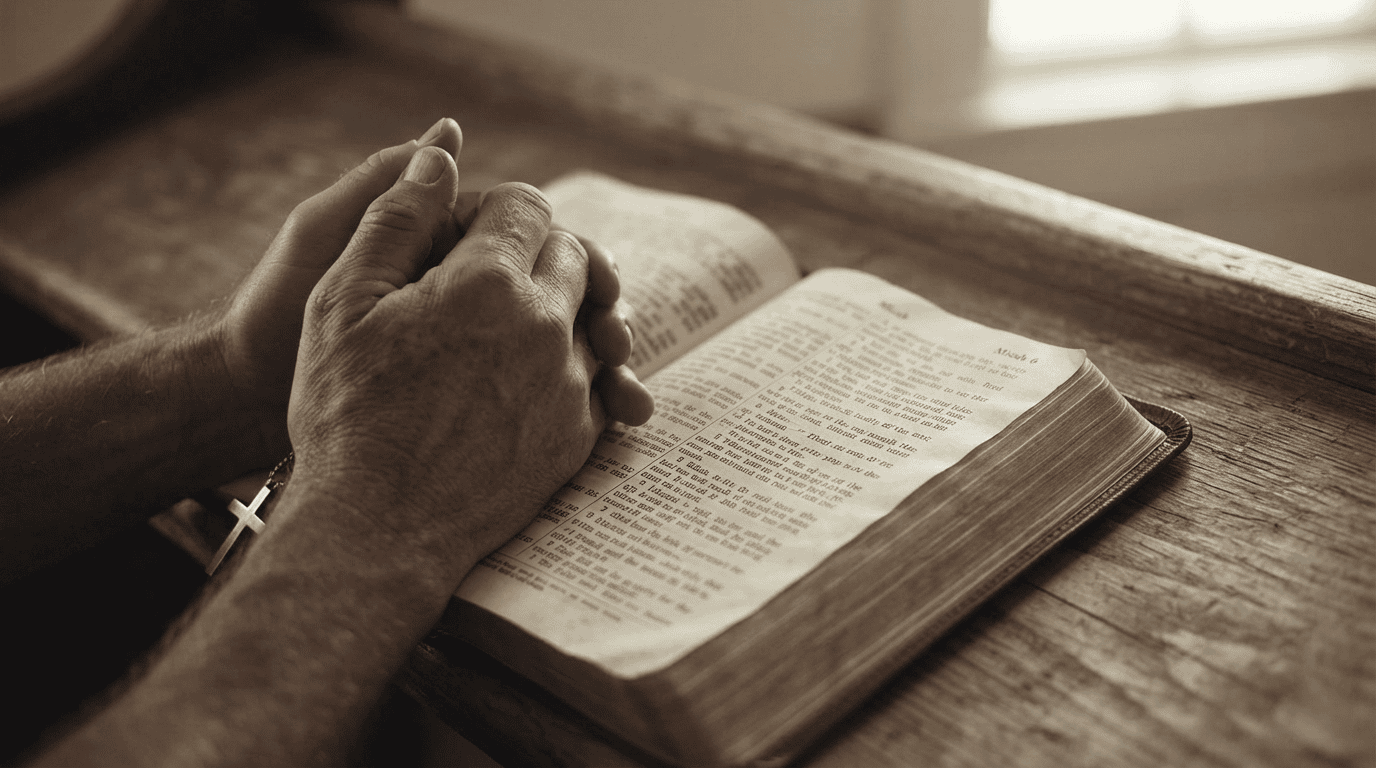
Justice means taking wrongdoing seriously and refusing to ignore people who are being harmed. Mercy means remembering the dignity and vulnerability of those who are struggling. Humility means recognizing that our own political understanding is limited and that our preferred leaders are not beyond correction.
The New Testament adds another challenge. Paul instructs believers to do nothing from selfish ambition and to value others above themselves (Philippians 2:3-4). Political disagreement does not cancel this command. Christians may argue strongly about immigration, public safety, economic policy, healthcare, education, national defense, or the responsibilities of government. They must still speak about opponents as human beings made in the image of God.
Modern campaigns produce a constant stream of information, accusation, commentary, and reaction. Some claims are accurate. Others are exaggerated, incomplete, or false. A Christian should not share a story merely because it embarrasses an opponent or supports a preferred candidate.
The wisdom literature repeatedly praises honesty. Proverbs says that the Lord delights in people who are trustworthy (Proverbs 12:22). The apostle Paul tells believers to test what they hear and hold on to what is good (1 Thessalonians 5:21). Together, these teachings create a practical discipline for political life: slow down, check the source, read beyond the headline, distinguish fact from opinion, and admit when a claim cannot be verified.
Truth does not become optional when it helps our side. Nor does justice require us to repeat an unproven allegation simply because it fits a story we already believe. Christians should be people whose words can be trusted, especially when public conversation is becoming more careless.
A Christian approach to politics must involve more than civility, voting, and campaign strategy. Throughout Scripture, God shows special concern for the poor, the foreigner, the widow, the orphan, the prisoner, the sick, and those who have little power (Deuteronomy 10:17-19; Isaiah 1:17). Jesus also teaches that love for people in need is closely connected to love for Him (Matthew 25:31-40).
This does not mean that all sincere Christians will reach the same policy conclusions. Christians may disagree about the proper size of government, the best way to protect life, how immigration laws should be enforced, how public resources should be distributed, or how communities should respond to crime. It does mean that Christians cannot treat vulnerable people as political talking points and then forget them once an election is over.
The important question is not only, “Which candidate will win?” It is also, “Who may be helped or harmed by the choices made in my name?” Christian citizenship should include attention to people who are easy to overlook and difficult to defend.
The Bible tells Christians to pray for those in authority and to respect the proper role of government (Romans 13:1-7; 1 Timothy 2:1-4). These passages encourage order, peace, and responsible citizenship. They do not teach that every government decision is morally right or that leaders are immune from accountability.
The same Bible records the apostles saying, “We must obey God rather than human beings” when authorities ordered them to stop bearing witness to Christ (Acts 5:29). Christian respect for authority therefore has a limit: human power remains under God’s judgment. Believers should honor public officials, obey lawful requirements, and reject needless disorder. At the same time, they should speak truthfully about injustice, defend the dignity of their neighbors, and seek peaceful reform when leaders misuse power. Submission is not the same as silence, and disagreement is not automatically rebellion.
Prayer should not be used to baptize a political preference. It should reshape the person who prays. Before voting, Christians can ask God for wisdom, honesty, courage, and compassion. They can ask for the ability to recognize both the strengths and weaknesses of every candidate. They can pray for the people who will be affected by public decisions, including those whose voices are rarely heard.
Paul specifically tells believers to pray for kings and all who are in authority (1 Timothy 2:1-2). That includes leaders we admire, leaders we distrust, and leaders for whom we did not vote.
Prayer after an election is just as important as prayer before one. It reminds Christians that God remains sovereign when their preferred candidate loses and that success does not make a winning candidate righteous.
Elections can change the balance of power, but they cannot heal the human heart. A new administration may improve some conditions and worsen others. Congress may pass helpful laws or make damaging decisions. Local leaders may serve faithfully or disappoint the communities that elected them. Christians should take these consequences seriously, but they should not place their ultimate hope in them.
Psalm 33:12 declares that the nation whose God is the Lord is blessed. Christians should handle this verse with care. It is not a campaign slogan or a guarantee that a modern nation will prosper because it uses Christian language. It is a reminder that no people can flourish by placing ultimate trust in power, wealth, violence, or national pride. A nation’s spiritual and moral condition matters, as do the character of its people and the integrity of its leaders.
The signs will eventually come down. Political advertisements will stop running. Candidates will celebrate, concede, or move on to another campaign. Yet the Christian calling will remain. Believers are still commanded to seek truth, practice justice, show mercy, pray for authorities, and love their neighbors.
Christians can care deeply about America without making America an idol. They can vote with conviction without treating political opponents as enemies. They can defend biblical principles without claiming that one party represents Christ perfectly. They can participate in public life while remembering that their highest allegiance belongs to Jesus.
The most faithful question for this election season is not simply, “Who will win?” It is this: “How can I remain faithful to Christ while seeking the good of my neighbors?” That question will not eliminate political disagreement. It can, however, change the spirit in which Christians disagree. It can make public participation less about fear and domination and more about service, truth, responsibility, and hope.
“He has shown you, O mortal, what is good. And what does the Lord require of you? To act justly and to love mercy and to walk humbly with your God.” Micah 6:8
Walking through faith and culture together. At Faith Focus Journal, we explore civic life, government, and faith through the lens of Scripture, seeking wisdom over division. Have a thought on faithful citizenship? Reach out through our contact page. We would love to hear from you.