Blue Zone communities are known for traditional diets rich in plant foods and minimally processed ingredients. Here is what Christians can learn about food, stewardship, moderation, and true life in Christ.

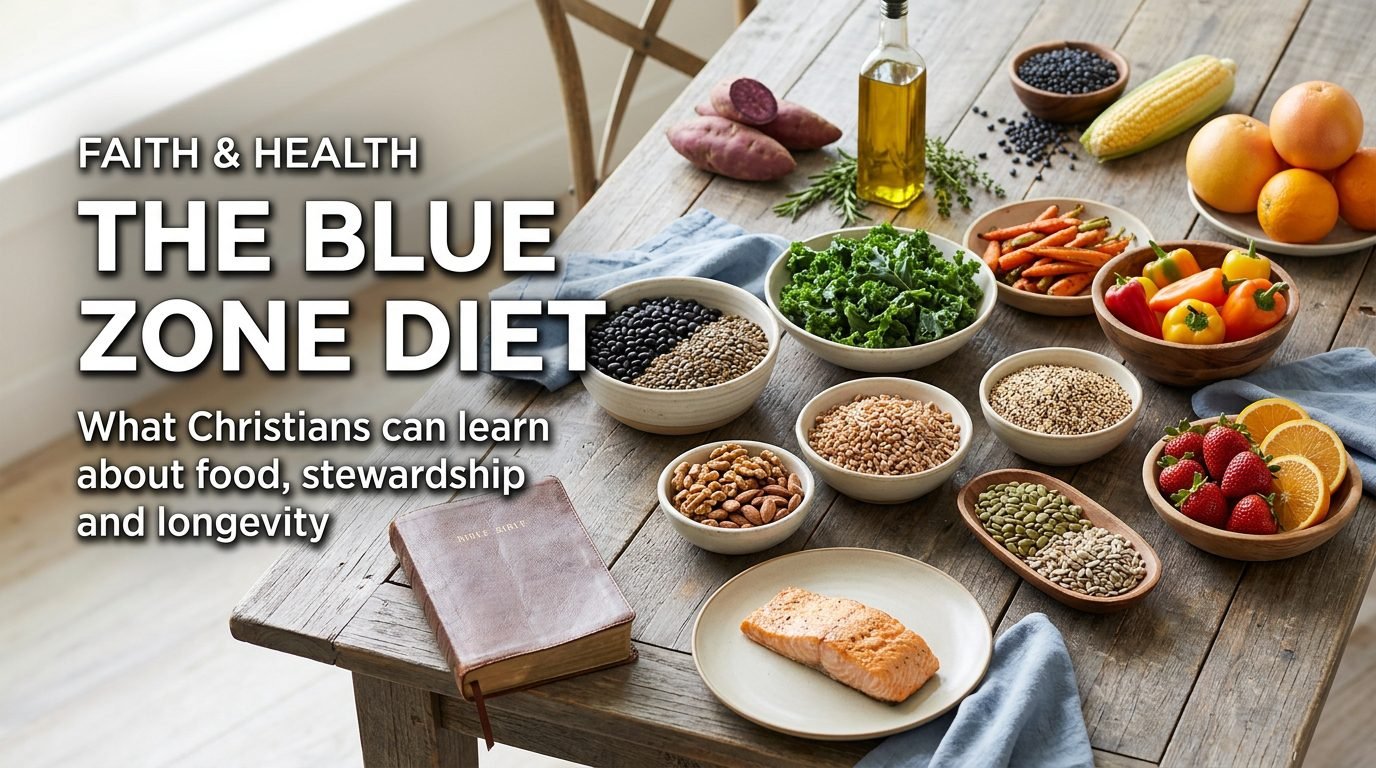
Traditional eating patterns associated with Blue Zone communities have attracted worldwide attention because of the relatively high number of residents who live into their 90s and beyond. Among the lifestyle characteristics researchers have studied, diet has received particular attention for its emphasis on vegetables, fruits, beans, whole grains, nuts and other minimally processed foods.
The five commonly identified Blue Zones are Okinawa, Japan; Sardinia, Italy; the Nicoya Peninsula of Costa Rica; Ikaria, Greece; and Loma Linda, California. Although these communities have different cultures, histories and food traditions, researchers have identified similarities in their traditional diets, including a strong emphasis on plant foods and relatively smaller amounts of meat and highly processed foods.
The term “Blue Zone diet” does not describe one standardized meal plan that every person in these regions follows. Instead, it broadly refers to traditional dietary patterns observed among populations associated with Blue Zones. Modern versions of the Blue Zone diet may simplify or adapt those traditions, so it is important to distinguish between the foods historically consumed in these communities and modern diet plans inspired by them.
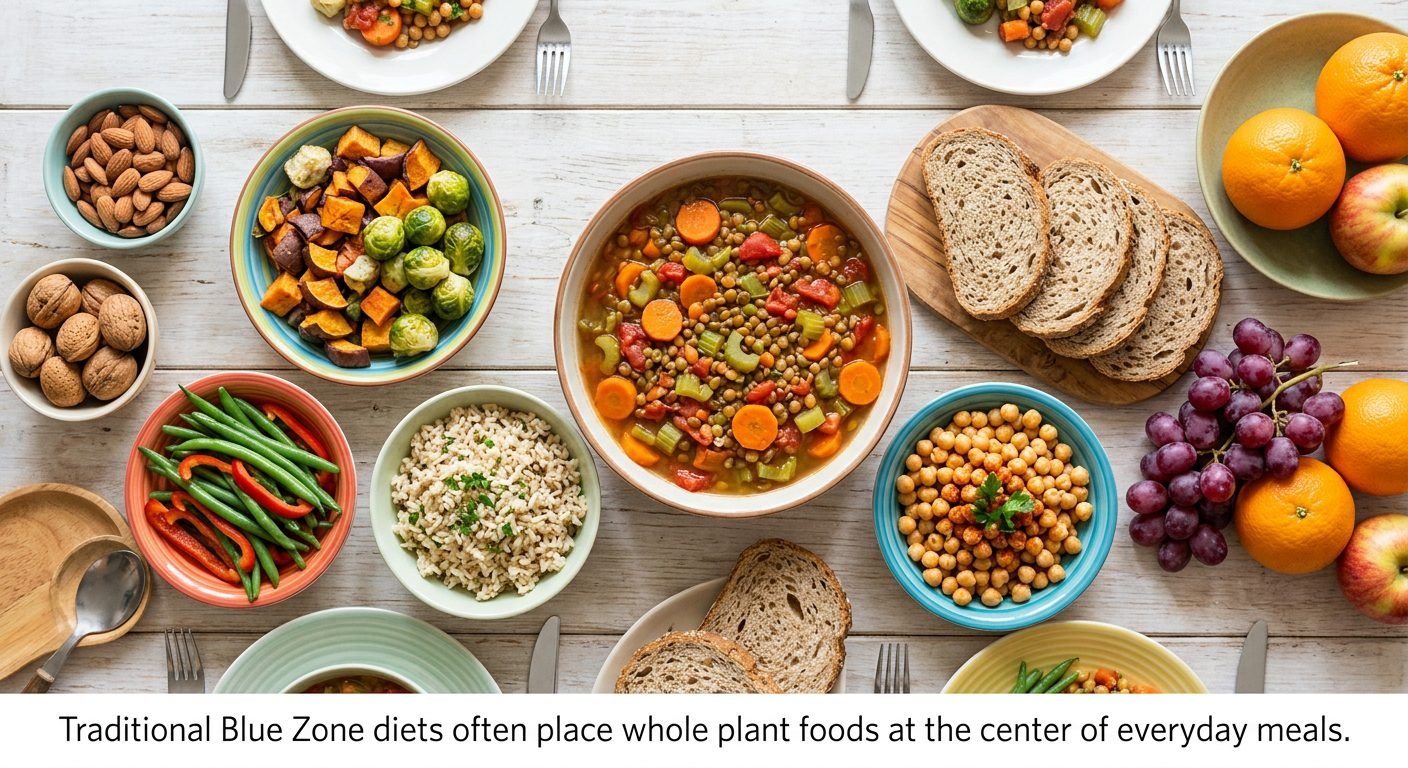
Many traditional Blue Zone diets are predominantly plant-based. Beans and other legumes are important staples, while vegetables, fruits, whole grains, nuts and seeds contribute variety and nutrients. Meat is generally consumed in smaller amounts in many of these traditional patterns rather than serving as the centerpiece of every meal.
These observations, however, do not establish that a Blue Zone-style diet guarantees a longer life. Longevity is influenced by numerous factors, including genetics, environment, health care, socioeconomic conditions and other lifestyle factors. Research on Blue Zones has also cautioned that the relationship between particular diets and exceptional longevity is more complicated than simply identifying what long-lived populations eat.
Nevertheless, the dietary patterns associated with these communities can encourage thoughtful consideration of how Christians approach food, health and stewardship.
One of the most recognizable characteristics of traditional Blue Zone diets is their emphasis on whole and minimally processed foods.
Beans, lentils and other legumes are common components of many traditional diets. Vegetables, fruits, whole grains, nuts and seeds also feature prominently. In several Blue Zone regions, these foods form the foundation of everyday meals rather than serving merely as occasional additions.
This emphasis can encourage people to think differently about food. Instead of viewing eating primarily as a source of convenience or indulgence, individuals can consider how nutritious foods can help support the bodies God has entrusted to them.
1 Corinthians 10:31 provides a foundational biblical principle: “Whether therefore ye eat, or drink, or whatsoever ye do, do all to the glory of God.”
For Christians, food does not have to become an obsession, but neither should it be treated carelessly. Eating can be approached with gratitude, wisdom and moderation.
Beans are particularly important when examining the traditional diets associated with Blue Zones. Lentils, chickpeas, black beans, soybeans and other legumes appear regularly in different regional food traditions.
These foods can be part of balanced meals alongside vegetables, fruits and whole grains. Their versatility has also allowed them to remain important staples across different cultures and generations.
The Bible provides an example of Daniel and his companions choosing a simple diet during their time in Babylon. Daniel 1 records that they requested vegetables and water rather than consuming the food and wine appointed by the king.
The passage should not be interpreted as a biblical command for Christians to become vegetarian or to follow a Blue Zone diet. Daniel’s decision was specifically connected to his faithfulness and convictions concerning the king’s provisions. However, the account demonstrates that simple food can be part of a life devoted to God.
The lesson for Christians is therefore not that one particular diet is spiritually superior, but that food choices can be approached thoughtfully as part of faithful stewardship.
Another characteristic frequently associated with traditional Blue Zone eating patterns is a lower reliance on highly processed foods compared with many modern diets.
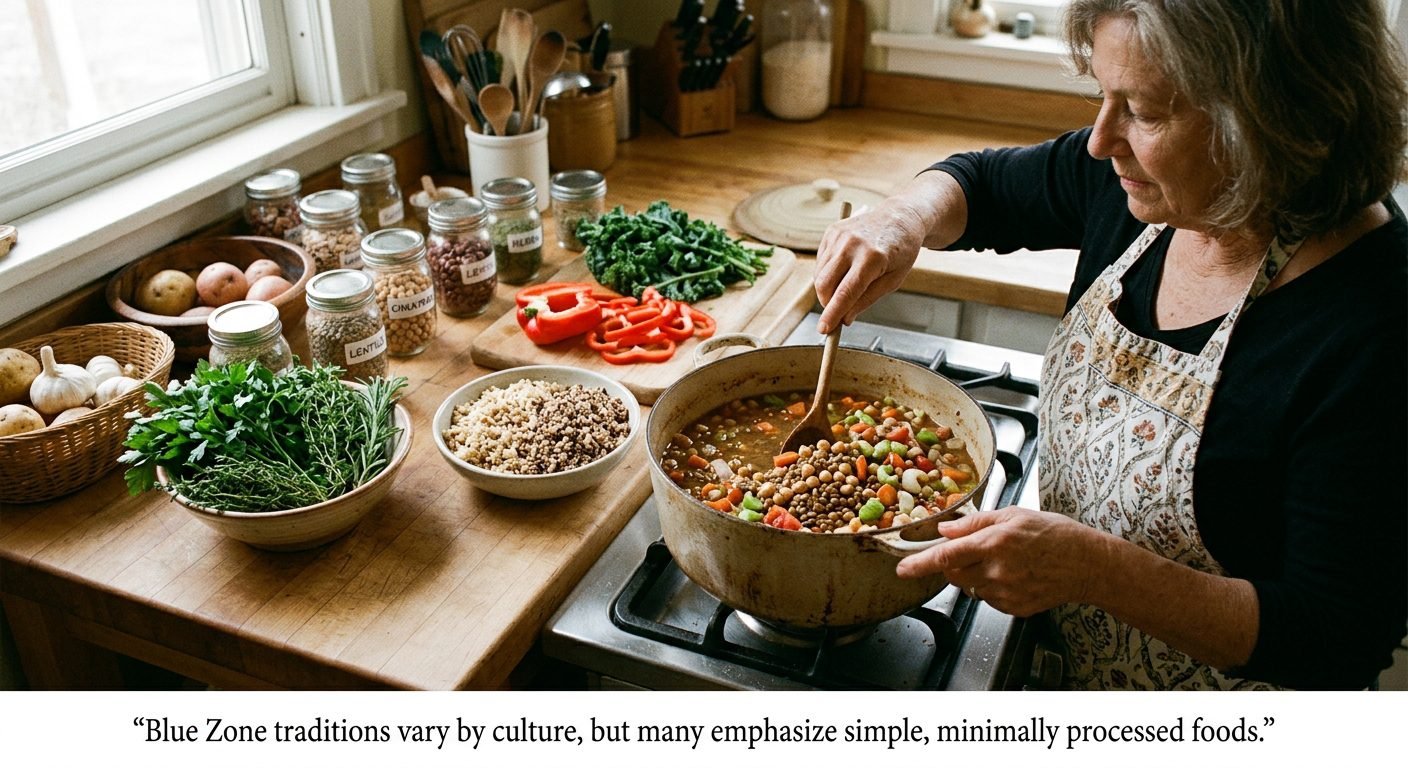
Traditional meals in these communities often consist of recognizable ingredients prepared in ways shaped by local culture. Vegetables, beans, grains, fruits, herbs and other basic foods can make up much of the diet.
This does not mean that every processed food is inherently wrong or that Christians must completely eliminate modern foods. Rather, the traditional Blue Zone patterns can encourage people to consider whether whole foods can play a greater role in their everyday meals.
Modern interpretations of the Blue Zone diet should also be distinguished from the traditional diets themselves. A contemporary diet plan inspired by Blue Zones may not perfectly represent what people in these regions historically ate.
Proverbs 25:16 offers a simple principle of moderation: “Hast thou found honey? eat so much as is sufficient for thee.”
The passage illustrates the wisdom of knowing when something is enough. Christians can apply that principle to eating by practicing gratitude without allowing food, health or longevity to become sources of excess or preoccupation.
The Blue Zone diet should not become a rigid list of foods that Christians believe they must eat or avoid.
Scripture calls believers to exercise self-control rather than allowing earthly desires to control them. Galatians 5:22-23 identifies self-control as part of the fruit of the Spirit.
That principle can apply to nutrition as well.
A Christian can enjoy a wide variety of foods while learning to practice moderation. Healthy eating should not become a source of fear, guilt or obsession. Likewise, pursuing longevity should never become more important than pursuing faithfulness to God.
1 Timothy 4:4 says, “For every creature of God is good, and nothing to be refused, if it be received with thanksgiving.”
Food can be enjoyed with gratitude while still being approached wisely.
Discussions about nutrition can sometimes turn a healthy eating pattern into a rigid standard by which people judge themselves or others.
The Blue Zone diet should not become another measure of a person’s worth. People have different nutritional needs, cultures, circumstances and access to food. A particular diet cannot guarantee longevity, and following a specific menu does not determine a person’s spiritual standing before God.
Jesus warned against becoming consumed by earthly concerns. Matthew 6:31-33 reminds believers not to be anxious about what they will eat or drink, but to “seek ye first the kingdom of God, and his righteousness.”
For Christians, nutrition belongs under the larger priority of seeking God.
That means believers can make thoughtful choices about food without allowing those choices to become an identity, an obsession or a form of legalism.
1 Corinthians 6:19-20 reminds Christians that their bodies belong to God: “Therefore glorify God in your body, and in your spirit, which are God’s.”
This provides a meaningful framework for considering the Blue Zone diet.
The goal is not simply to imitate people in Okinawa, Sardinia, Nicoya, Ikaria or Loma Linda in hopes of extending one’s life. Instead, believers can consider whether some of the dietary principles associated with these communities, such as eating more whole plant foods, including beans and vegetables, choosing less processed foods and practicing moderation, can encourage wiser stewardship.
Health itself is not the Christian’s ultimate pursuit. Faithfulness is.
Christians can care for their bodies while remembering that physical health is only one part of a much larger calling to honor God.
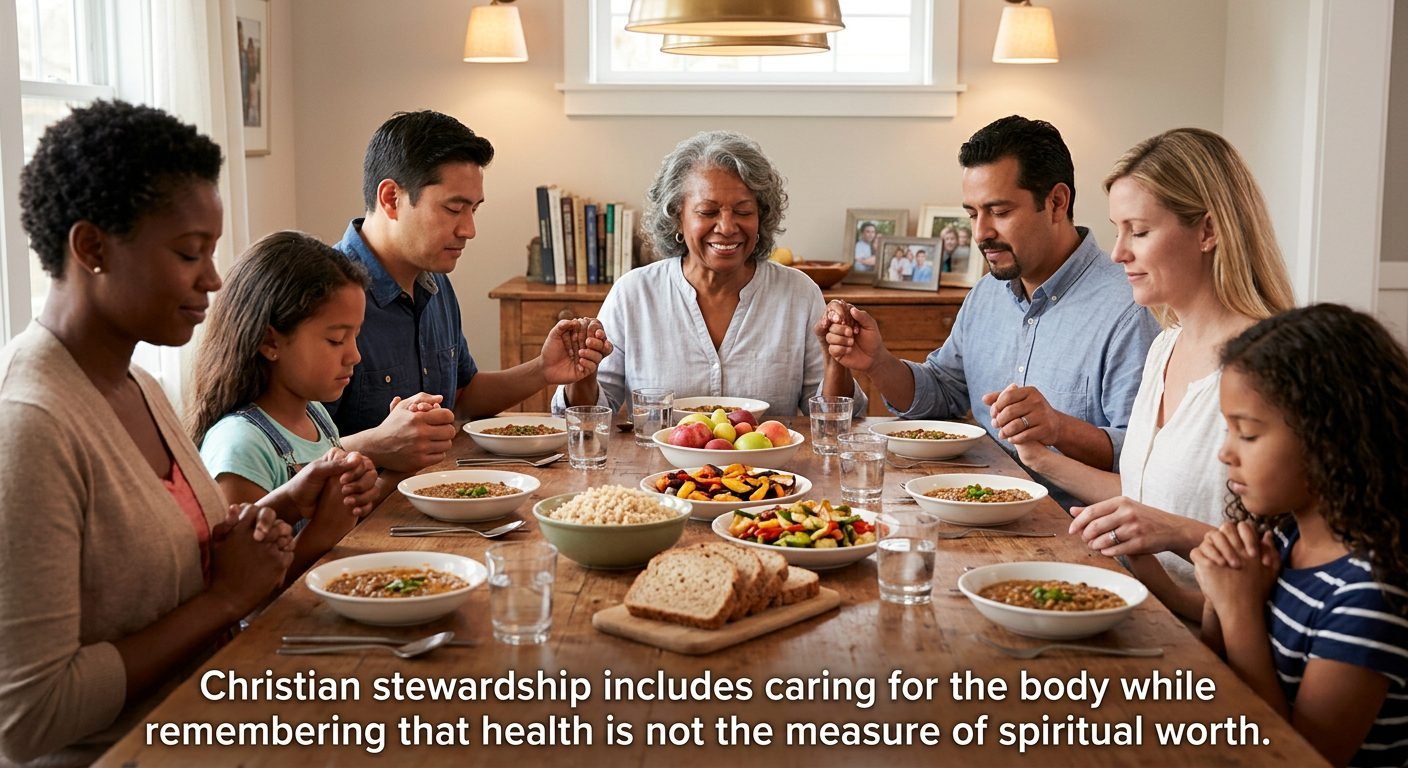
Even the healthiest diet cannot eliminate aging, illness or death. A nutritious eating pattern may support overall well-being, but no diet can promise a specific lifespan.
James 4:14 describes earthly life as “a vapour, that appeareth for a little time, and then vanisheth away.”
That reality should not discourage Christians from caring for themselves. Instead, it places health in its proper perspective.
Believers can eat nutritious foods, practice moderation and make wise decisions while recognizing that the number of their days ultimately remains in God’s hands.
Psalm 90:12 says, “So teach us to number our days, that we may apply our hearts unto wisdom.”
The Christian response to longevity is therefore not fear of death or an obsession with extending life, but faithful use of the time God provides.
The Blue Zone diet offers useful observations about traditional eating patterns, particularly the emphasis on beans, vegetables, fruits, whole grains, nuts and other minimally processed foods. These principles may encourage people to think more carefully about their eating habits and physical stewardship.
But Christians should not confuse nutritional wisdom with the promise of eternal life.
No diet can provide what only Christ can give.
Jesus declared in John 11:25, “I am the resurrection, and the life: he that believeth in me, though he were dead, yet shall he live.”
That promise is greater than any claim about longevity.
Christians can be thankful for nutritious food and seek to care wisely for the bodies God has given them. They can learn from traditional dietary patterns without becoming enslaved to dietary rules or making longevity an idol.
The Blue Zone diet can serve as a reminder that simple, nourishing foods and moderation have value. But the Christian’s ultimate goal is not merely to add years to life. It is to use every day God provides for His glory.
As 1 Corinthians 10:31 reminds believers, whether they eat, drink or do anything else, they are called to do it all for the glory of God.
The goal is not simply to eat for a longer life, but to faithfully steward the life God has given us.
The Blue Zone diet is not one standardized meal plan. The term broadly describes traditional eating patterns associated with five regions known for exceptional longevity, with an emphasis on plant foods and minimally processed ingredients.
Beans and other legumes, vegetables, fruits, whole grains, nuts and seeds are common. Traditional diets vary considerably by region, and some also include smaller amounts of meat, fish or dairy.
No. Research does not establish that following a Blue Zone-style diet guarantees exceptional longevity. Genetics, environment, physical activity, social relationships, socioeconomic conditions and other factors also influence health and lifespan.
No. Scripture does not command Christians to follow the Blue Zone diet or become vegetarian. Daniel 1 describes a specific decision made in a particular historical and spiritual context, rather than establishing a universal Christian dietary rule.
Christians can consider principles such as gratitude, moderation, wise food choices and stewardship without turning nutrition into legalism or making longevity an idol. Ultimately, Scripture calls believers to glorify God in every part of life, including how they care for their bodies.
Walking through faith and culture together. At Faith Focus Journal, we explore food, health, stewardship, and Christian living through the lens of Scripture. Caring for the body can be an expression of gratitude, but our ultimate hope rests in Christ. Reach out through our contact page. https://faithfocusjournal.com/contact-us/ We would love to hear from you.