As US sanctions on Iran intensify and China pushes back, this is a Christian reflection on power, justice, and remembering the ordinary people caught between nations at war.
A Christian reflection on power, sanctions, and the pursuit of peace
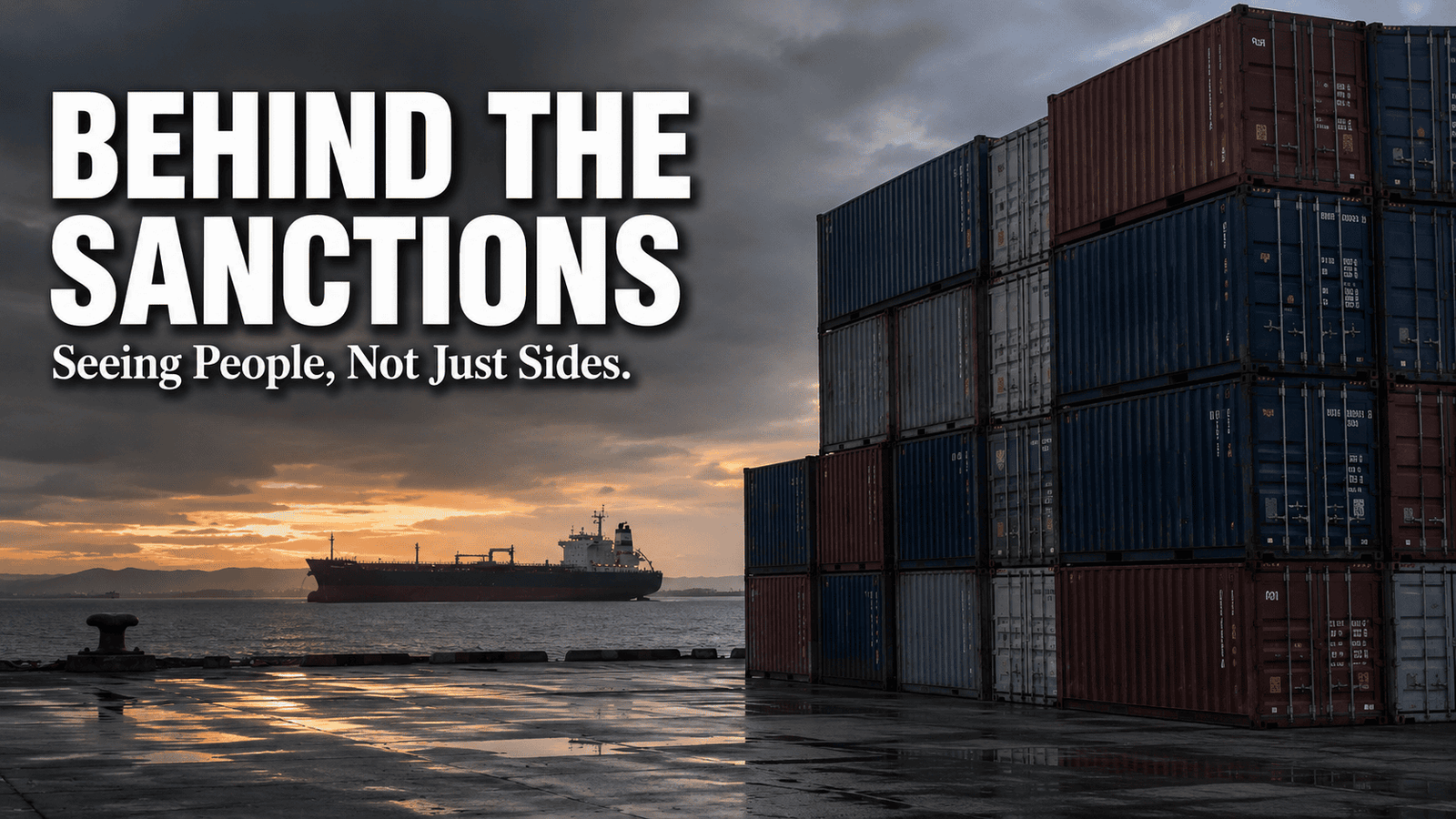
The latest U.S. sanctions campaign against Iran is being described in the language of economic warfare. Treasury Secretary Scott Bessent has vowed an “economic D-Day” for countries that continue buying Iranian oil, as Washington seeks to cut off the financial networks supporting Iran’s government following the recent US-Israel war on Iran. China, Iran’s most important trading partner and the buyer of roughly 90 percent of its oil exports, has pushed back sharply. “Economic warfare and maximum pressure will not help resolve the issue,” said Chinese Foreign Ministry spokesperson Lin Jian, warning the approach would “only further intensify tensions and conflicts, create spillover risks.” Iran, meanwhile, has promised resistance and retaliation, according to reporting from CNN and NPR.
For Christians, however, this is not merely a story about presidents, oil shipments, financial systems, or the Strait of Hormuz. It is a story about people, people whose lives can be altered by decisions made in government offices thousands of miles away.
That is where a Christian response should begin.
It is easy to read about an “economic D-Day” and imagine a contest between powerful nations. It is harder, but far more faithful, to remember the Iranian family searching for cancer medicine, the hospital unable to replace broken equipment, the worker whose bank account has been frozen, or the American parent paying more at the gas pump and cutting something else from the family budget.
Nations speak in terms of leverage. Families experience the results as fear, hunger, uncertainty, and grief.
The Bible does not permit us to view international conflict only through the lens of power. Again and again, Scripture directs our attention toward the vulnerable. “Speak up for those who cannot speak for themselves,” Proverbs says, “for the rights of all who are destitute” (Proverbs 31:8-9). Isaiah condemns rulers who make unjust laws and deprive the poor of their rights (Isaiah 10:1-2).
Those passages should make Christians cautious whenever a policy is described as necessary, decisive, or overwhelming. Strength may be necessary in a broken world, but strength is never the same as righteousness.
This does not mean governments have no responsibility to confront evil. Scripture recognizes the duty of civil authority to restrain wrongdoing and protect the public (Romans 13:1-4). Iran’s government, like every government, must be held accountable for violence, threats, terrorism, and the suffering it inflicts. China’s economic choices also deserve honest examination. A Christian response should not excuse injustice simply because the perpetrators belong to a nation with which we sympathize.
But Romans 13 is not a blank check for rulers. The same Bible that speaks about authority also declares what God requires: “To act justly and to love mercy and to walk humbly with your God” (Micah 6:8).
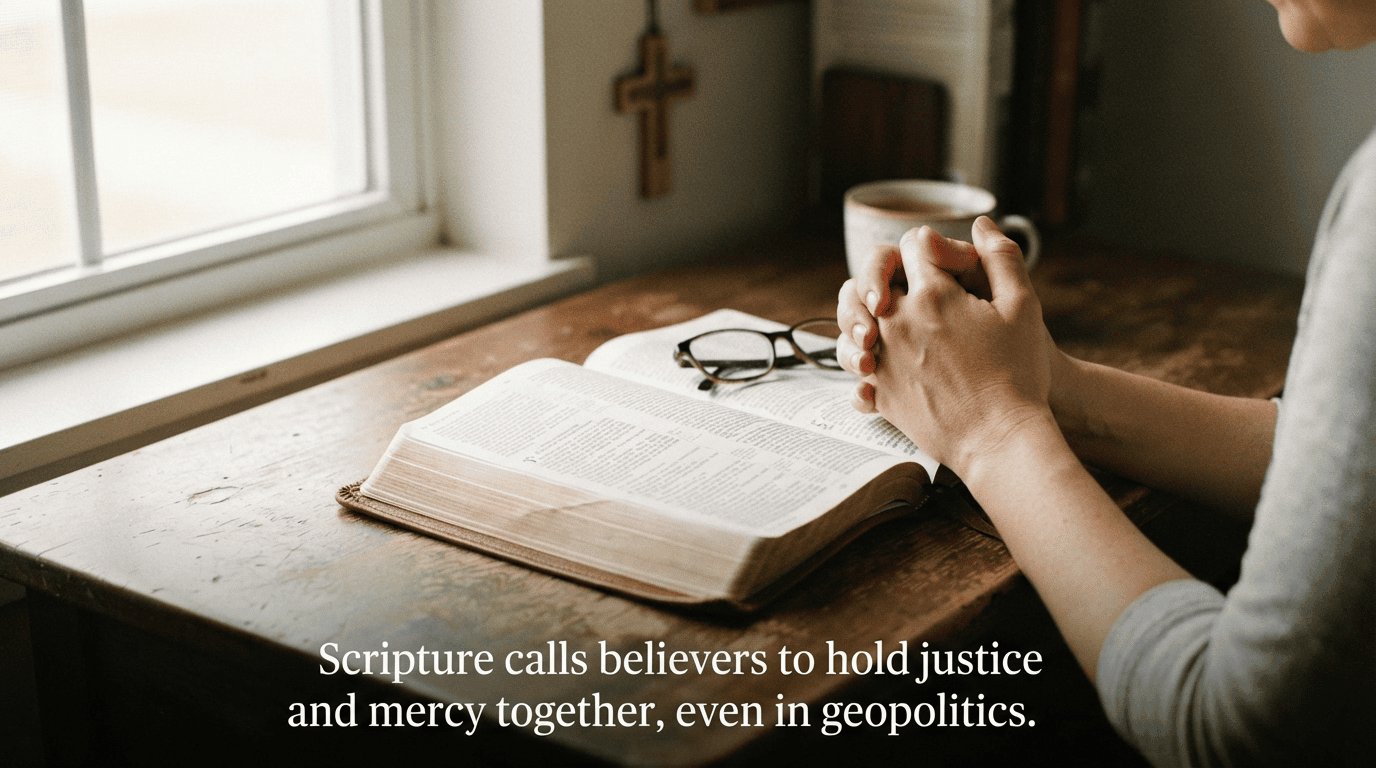
A government may have the legal power to impose punishment and still need to ask whether that punishment is wise, proportionate, and morally defensible. If sanctions are intended to weaken a regime but, in practice, prevent ordinary people from obtaining medicine, food, or functioning medical equipment, Christians should not simply shrug and say, “That is how war works.” Human beings are not disposable pieces on a geopolitical chessboard.
The story of Joseph offers a helpful contrast. When famine threatened entire nations, Joseph did not treat suffering as an opportunity to defeat everyone around him. He organized resources so that life could be preserved (Genesis 41:53-57). His leadership involved planning, authority, and difficult decisions, but the ultimate purpose was the protection of human life.
That is a standard worth remembering in today’s debates. Economic policy should not be judged only by whether it weakens an enemy. It should also be judged by whether it protects the innocent, preserves humanitarian access, and leaves a door open for peace.
The Good Samaritan offers another necessary correction. The wounded man on the road belonged to a people despised by the Samaritan community, yet compassion crossed the boundary created by history and politics (Luke 10:25-37). The Samaritan did not first ask whether the injured man’s government was innocent. He saw a suffering person and responded with mercy.
That is a question Christians should ask when reading about Iran, China, Israel, the United States, or any other nation: Am I seeing people, or only sides?
The reporting also shows how quickly economic pressure can become a cycle of retaliation. Washington threatens countries that continue doing business with Iran, having already sanctioned major Chinese refineries and shipping lines. China warns that unilateral sanctions will deepen the crisis. Iranian officials promise resistance and retaliation. Each side speaks as though backing down would be weakness. Yet the longer the conflict continues, the more ordinary people carry the burden.
There is a spiritual danger in this kind of language. When leaders and citizens begin to speak of entire nations as enemies, it becomes easy to forget that the people inside those nations bear the image of God.
Jesus gave His followers a command that is especially difficult in moments like this: “Love your enemies and pray for those who persecute you” (Matthew 5:44). He did not say evil should be ignored. He did not call His disciples to approve of cruelty. He did, however, forbid the hatred that turns another human being into a target rather than a person.
Christian compassion does not require moral confusion. We can condemn the actions of a government without despising its people. We can support accountability without celebrating suffering. We can recognize the need to restrain danger while still asking whether our methods are making the world more dangerous.
Christians should also resist the temptation to treat national power as our ultimate hope. Governments matter, and policy matters, but no president, alliance, military, or economic system can bring the peace humanity ultimately needs.
Psalm 146 warns us not to put our trust in princes, because human rulers cannot save. That is not an argument for passivity. It is an argument for humility. Christians can support responsible government while remembering that our deepest allegiance is to Christ, not to a flag, political party, or national leader.
The church should be especially careful when patriotism begins to sound like discipleship. No nation is the kingdom of God. No political leader is the Messiah. And no foreign-policy victory can replace the righteousness, mercy, and reconciliation to which Christ calls His people.
How, then, should believers respond?
First, we should pray specifically. First Timothy 2:1-2 calls us to pray for kings and all those in authority. We should pray for wisdom for American and Chinese leaders, protection for sailors and aid workers, courage for Iranians living through economic hardship, and restraint for every military and political decision-maker.
We should not pray merely for our preferred side to win. We should pray for truth to be exposed, civilians to be protected, humanitarian channels to remain open, and a genuine path toward peace to emerge.
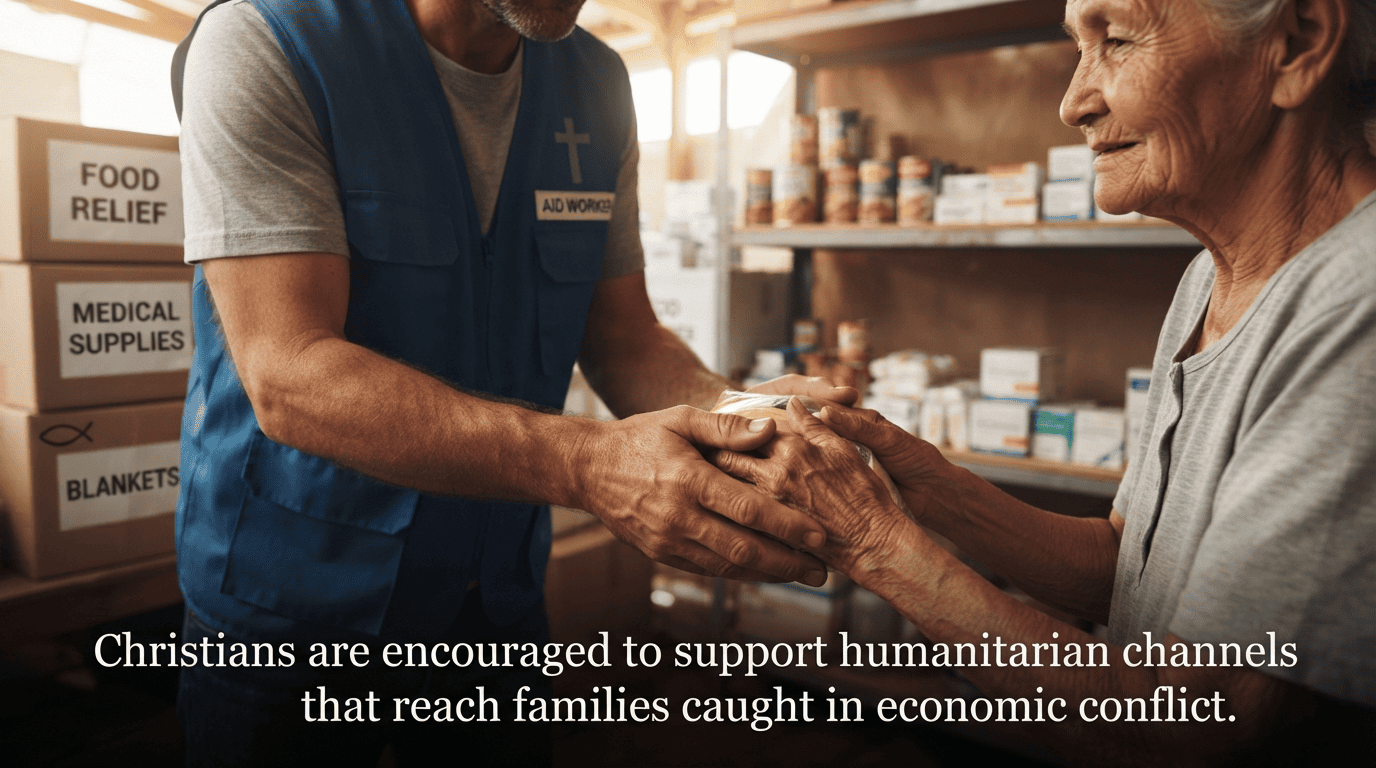
Second, we should practice compassion in tangible ways. If credible humanitarian organizations are helping families obtain medicine, food, or medical care, Christians should consider supporting them. Jesus’ teaching in Matthew 25:35-40 is unmistakable: He identifies Himself with the hungry, the thirsty, the stranger, the sick, and the imprisoned.
Our response to international conflict cannot stop at opinions. If we claim to follow Christ, suffering should move us toward action.
Third, we should be careful with our words. We should verify claims before repeating them, reject racist and nationalistic contempt, and refuse to celebrate economic pain simply because it is happening to an adversary. Proverbs 18:13 warns against answering before listening. In an age of instant headlines and social-media outrage, patient truthfulness is a form of Christian witness.
Finally, we should ask better questions. Is this policy actually restraining evil, or is it mainly producing suffering that will deepen resentment? Are humanitarian protections strong enough to reach the people who need them? Are diplomatic channels still open? Are leaders seeking peace, or merely trying to avoid appearing weak?
Jesus said, “Blessed are the peacemakers” (Matthew 5:9). Peacemaking is not cowardice, and it is not surrender. It is the difficult work of pursuing justice without losing mercy.
The unfolding events remind us that economic war is still war. It may not always produce the same images as bombs and missiles, but it can close hospitals, empty shelves, raise prices, and break the confidence of families.
Christians should therefore hold two truths together: evil must be confronted, and human life must be protected. We can acknowledge the serious wrongdoing of governments without becoming indifferent to the suffering of their people.
In the end, the Christian question is not simply, “Who is winning?” It is, “Are we becoming people who reflect the character of Jesus while the nations rage?”
May God give leaders courage without pride, power without cruelty, wisdom without deception, and the humility to choose peace whenever peace can be pursued without abandoning justice.
“Let justice roll on like a river, righteousness like a never-failing stream!” Amos 5:24
Walking through faith and culture together. At Faith Focus Journal, we explore international conflict, justice, and faith through the lens of Scripture, seeking wisdom over division. Have a thought on faith and global affairs? Reach out through our contact page. We would love to hear from you.