Data centers are draining Texas water and power, becoming a flashpoint in the Paxton-Talarico Senate race. Here is a Christian reflection on stewardship, loving one’s neighbor, and discerning both sides.

By London Brown
There is a scene unfolding in Killeen, Texas, that says more about the soul of a nation than most headlines let on. Scot Arey, an Army veteran who spent a lifetime voting Republican, showed up this month to a campaign event for a Democrat. Not because his convictions shifted overnight, but because he watched the ground beneath his community change, literally.
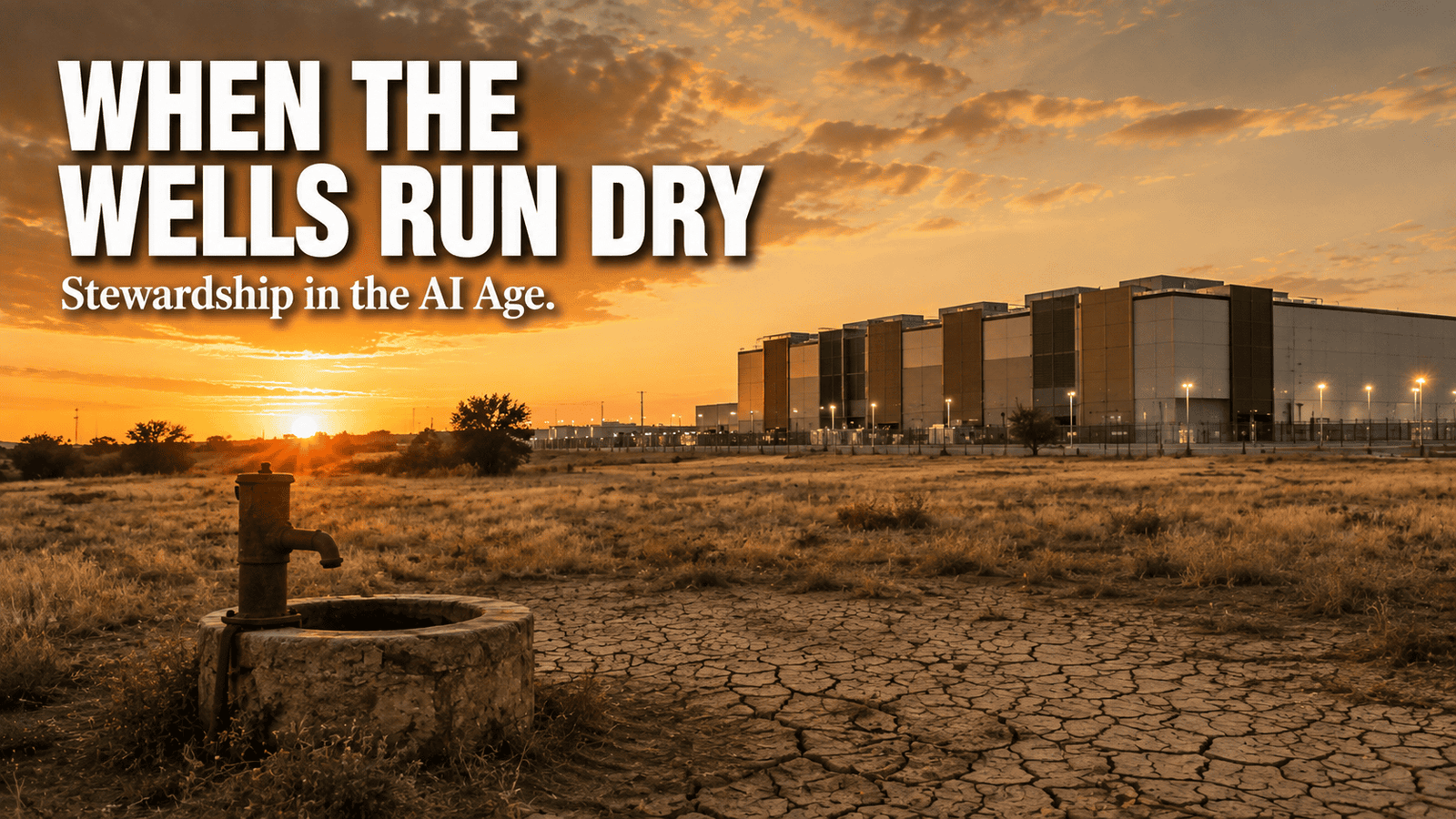
Data centers, the humming, water-hungry, power-draining buildings that keep our phones fast and our AI chatbots talking, have begun reshaping small towns faster than either political party has been willing to reckon with. NBC News reporter Natasha Korecki captured this moment in Killeen as the opening of a larger story: a Texas Senate race between Attorney General Ken Paxton and Democratic candidate James Talarico that increasingly hinges not on the usual culture-war lines, but on water tables, power grids, and who gets to speak for a community when a billion-dollar server farm moves in next door.
Reading the piece in full, and the broader reporting around it, one is struck by how ordinary the crisis is. It is not about ideology so much as it is about a resource question as old as Scripture itself: who owns the water, who protects the land, and who is accountable to the neighbor down the road? Gov. Greg Abbott has ordered an audit of new data center projects. Paxton has released a four-point plan addressing grid strain and water use, after months of calling the issue “complicated.” Talarico has built his campaign, in part, on promises to make developers pay their own infrastructure costs and give local communities a real veto over what gets built near their homes. Both campaigns, notably, have taken substantial money from data-center-connected donors, Paxton in the hundreds of thousands, Talarico in the tens of millions, including a reported $10 million from LinkedIn co-founder Reid Hoffman, a detail that should give any believer pause before adopting either man as a champion of the little guy without question.
From the very first chapters of the Bible, humanity is handed a job description before it is handed almost anything else. God places Adam in the garden “to work it and keep it” (Genesis 2:15). Not to exploit it. Not to extract from it without consequence. To keep it, the Hebrew word shamar, the same word used for a watchman guarding a city. Water, in particular, carries enormous weight throughout Scripture. It sustains life in the wilderness (Exodus 17:6), it is described as a gift not to be squandered (Proverbs 25:26 compares a righteous man who gives way before the wicked to “a muddied spring and a polluted well”), and Christ himself offers it as the very image of eternal life to the woman at the well in John 4.
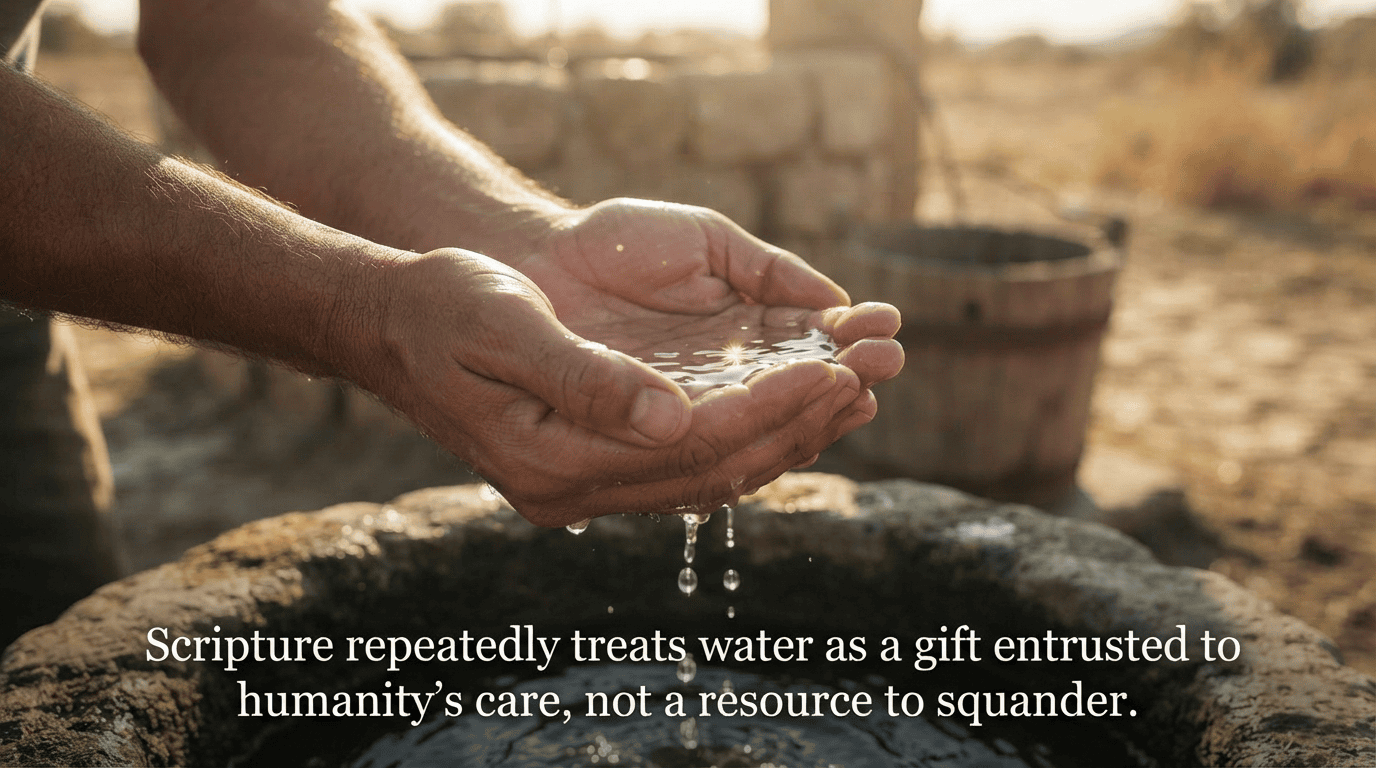
Texas data centers are projected to consume tens of billions of gallons of water a year, with some researchers warning that figure could climb toward 9 percent of the state’s total water use by 2040. That is not a partisan talking point. It is a stewardship question, and Christians ought to be the first people asking it rather than the last. A believer does not need a party affiliation to say plainly that a watchman who lets the well run dry to keep a server cool has failed the job God gave humanity in the garden.
One of the most sobering threads in this story is how many of these projects arrive with little to no input from the people who will live beside them. Hood County asked the Attorney General’s office back in February whether it had the authority to pause a development the community did not want. Six months later, the request still sat unanswered.
Whatever one thinks of the politics involved, Scripture is not silent on what it means to be a good neighbor. Jesus was asked to define the term directly, and He answered with the parable of the Good Samaritan, a story that ends with the piercing instruction, “Go and do likewise” (Luke 10:37). Loving one’s neighbor as oneself (Mark 12:31) is not a sentiment reserved for Sunday mornings. It is meant to shape how power is exercised over people who have no seat at the table when zoning boards and utility commissions make decisions that will run their air conditioners hot and their water bills higher for a generation.
James’s letter warns believers not to show favoritism to the wealthy while brushing past the poor man at the door (James 2:1-4). A community in rural Texas asking to be heard before a hyperscale facility breaks ground is not asking for anything radical. It is asking the basic dignity Scripture demands be extended to every neighbor, powerful or plain.
It would be dishonest, and unhelpful to any reader trying to think as a Christian rather than a partisan, to pretend either candidate stands untouched by the money at the center of this fight. Paxton has drawn roughly $500,000 from donors tied to the data center industry even as he now proposes to rein it in. Talarico has drawn more than $10 million from similar interests, including that single reported gift from tech investor Reid Hoffman, even as he positions himself as the one holding the industry accountable.
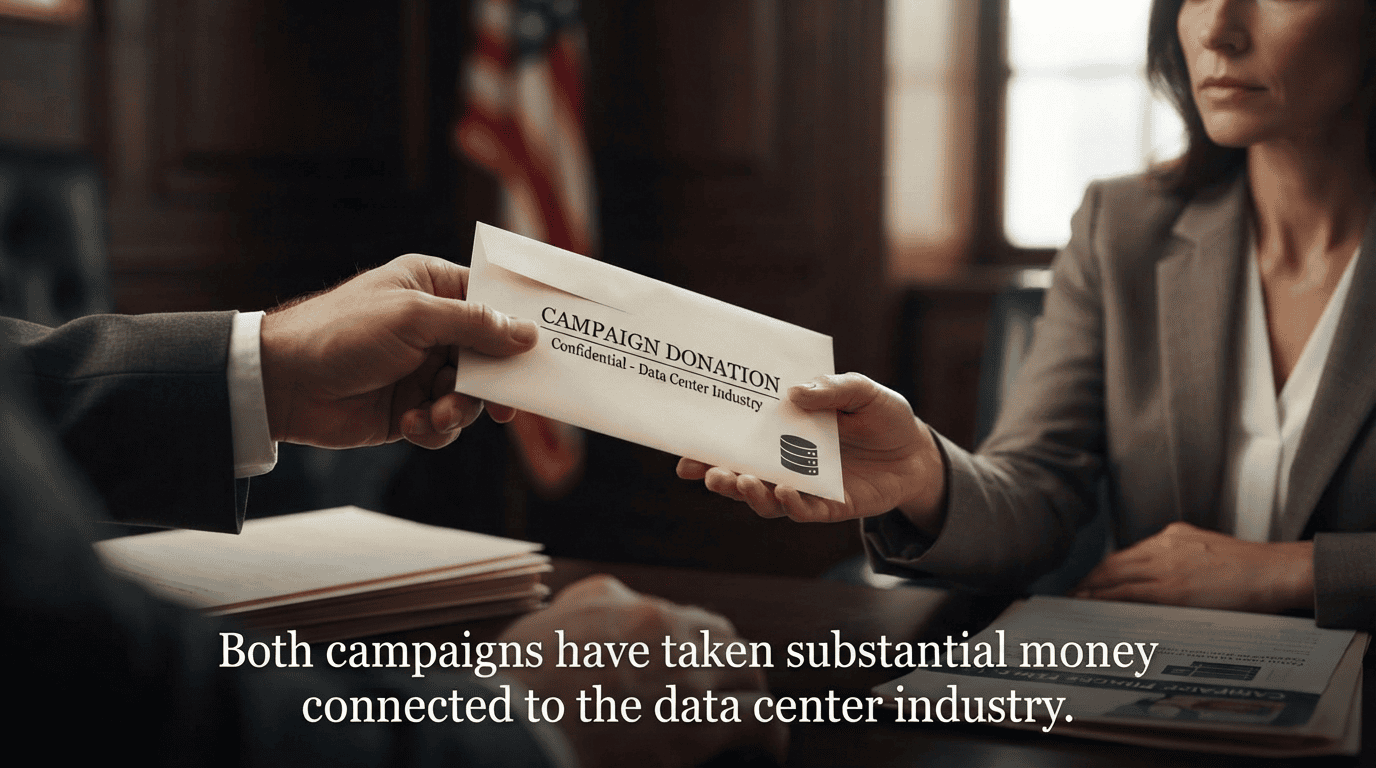
Paul’s warning to Timothy was not that money itself is evil, but that “the love of money is a root of all kinds of evils” (1 Timothy 6:10), and that those who chase after wealth “plunge people into ruin and destruction.” That warning was not written for one political party. It was written for anyone who takes an offering and then asks the giver for nothing in return, an arrangement Scripture treats with deep suspicion no matter whose name is on the check.
This is where discernment matters more than tribal loyalty. A Christian voter reading this race is not called to assume the candidate who talks the loudest about protecting families is automatically the one least entangled with the industry he claims to be confronting. Proverbs 18:17 reminds us that “the first to state his case seems right, until the other party comes and examines him.” Both cases here deserve examination.
Solomon’s prayer upon taking the throne is instructive here. He did not ask God for riches or long life. He asked for “an understanding mind to govern your people, that I may discern between good and evil” (1 Kings 3:9). That is precisely the kind of discernment this moment in Texas requires from its elected leaders, the wisdom to weigh genuine economic opportunity, jobs, and technological progress against the real cost being paid in water, electricity, and community trust. Abbott’s audit, whatever its political motivations, at least gestures toward the pause-and-examine posture Scripture commends. Whether it arrives “too little, too late,” as Arey put it, is a fair question voters are entitled to weigh for themselves.
For those of us who write and speak from a place of faith, whether from a pulpit, a podcast microphone, or a page like this one, the temptation in an election season is to let policy debates flatten into red versus blue. This story resists that flattening. It is a reminder that the call to steward creation, to love an unheard neighbor, to distrust the love of money, and to pray for leaders with Solomon’s wisdom rather than mere ambition, belongs to every believer regardless of which lever they pull in November. The wells of Texas, and the people who live beside them, deserve nothing less than that kind of discernment.
“The Lord God took the man and put him in the garden of Eden to work it and keep it.” Genesis 2:15
Walking through faith and culture together. At Faith Focus Journal, we explore stewardship, community, and faith through the lens of Scripture. Have a thought on faith and creation care? Reach out through our contact page. We would love to hear from you.