Rising bond yields are affecting financial markets, borrowing costs and government finances. Here is what Christians should understand about the changes and how Scripture calls us to respond with wisdom, stewardship and faith.
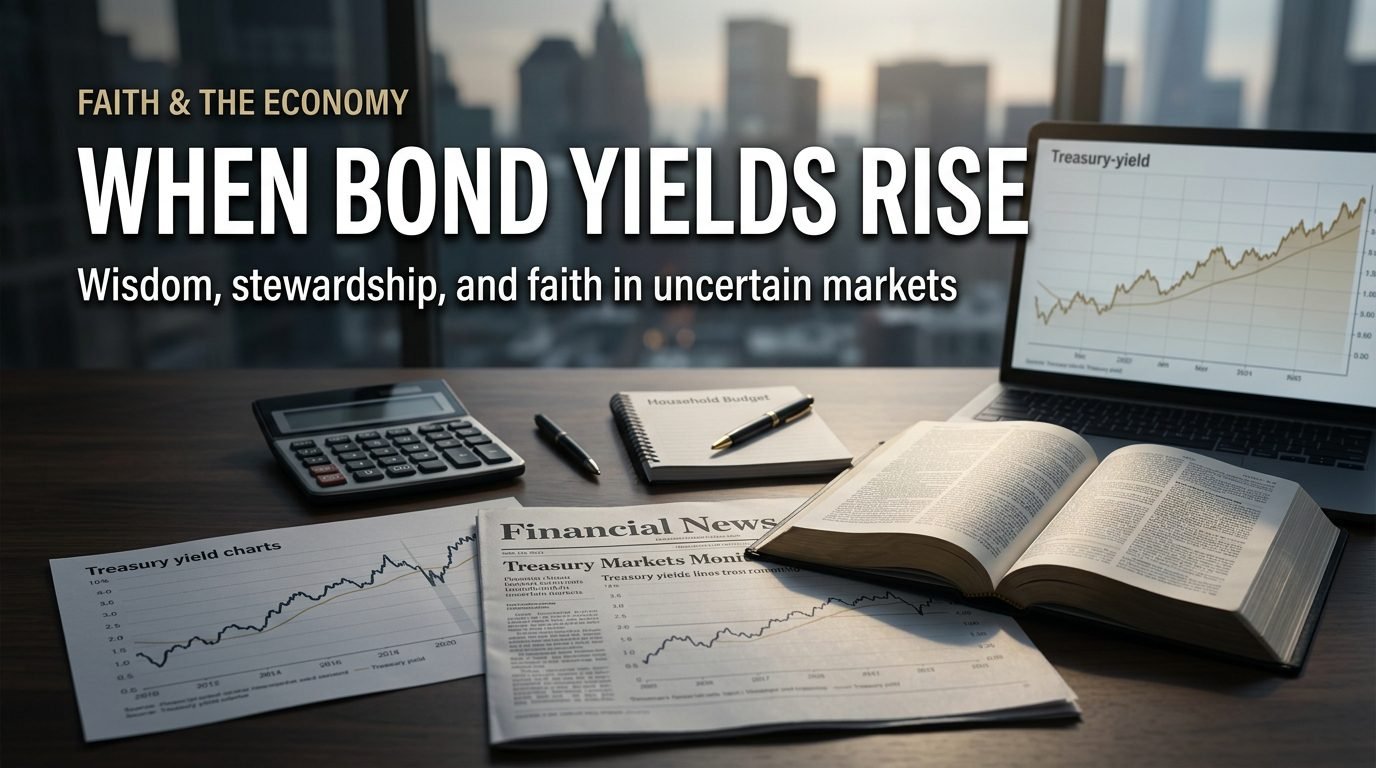
WASHINGTON, D.C. Rising bond yields may sound like a concern limited to Wall Street, but their effects can reach households, businesses and government budgets.
In early September 2026, the benchmark 10-year U.S. Treasury yield moved to around 4.8%, reaching levels not seen since late 2023. Reuters reported that the increase has come amid inflation concerns, higher energy prices, geopolitical tensions, government borrowing and strong demand for capital connected to major corporate investments, including artificial intelligence infrastructure.
For Christians, these developments offer an opportunity to understand an important economic issue without responding in fear. Scripture does not predict where bond yields will go or prescribe a modern economic policy. It does, however, provide enduring principles of wisdom, responsible stewardship and humility that can help believers respond thoughtfully when economic conditions change.
A bond is essentially a loan. When an investor purchases a government bond, the investor is lending money in exchange for interest payments and the eventual return of the original investment.
A bond’s yield represents the return investors receive. Bond prices and yields generally move in opposite directions. When the price of an existing fixed-rate bond falls, its yield generally rises. The U.S. Securities and Exchange Commission explains this relationship as a fundamental principle of bond investing.
Several forces are contributing to higher Treasury yields.
Investors are watching whether inflation will remain elevated, particularly as higher energy prices and geopolitical instability could put additional pressure on prices. At the same time, the federal government continues to borrow heavily, increasing the amount of debt that financial markets must absorb.
The Federal Reserve has also noted that longer-term debt yields and mortgage-related rates have remained elevated. Research published by the Federal Reserve in 2026 found that higher expected government debt can contribute to higher longer-term interest rates, although debt is only one factor influencing Treasury yields.
Major technology companies have also been borrowing to finance large investments in artificial intelligence and data-center infrastructure. That additional demand for capital is another factor investors are watching.
Questions about future interest-rate policy and demand for U.S. government debt have also contributed to the discussion.
Still, higher yields should not automatically be interpreted as a prediction of an economic crisis. Yields can rise for different reasons, including stronger economic growth and increased investment. The significance of rising yields depends on the broader economic environment and the combination of forces driving the market.
The importance of bond yields becomes clearer when their effects move beyond financial markets.
Treasury yields serve as important benchmarks throughout the financial system. The 10-year Treasury yield, for example, influences the broader interest-rate environment that affects mortgage borrowing. Mortgage rates are also influenced by mortgage-backed securities and other market factors, so the relationship is not one-for-one.
For a family considering the purchase of a home, even a relatively small increase in borrowing costs can affect the size of the loan it can afford.
Higher rates can also make refinancing less attractive and may affect housing demand.
Businesses can face similar pressures. Companies that need to borrow money to build facilities, purchase equipment or expand operations may find those projects more expensive when interest rates rise. This can be particularly significant for industries requiring substantial upfront investment.
The effects also extend to the federal government.
Higher Treasury yields can increase the government’s interest costs when it issues new debt or refinances maturing debt. Over time, rising interest expenses can place additional pressure on federal budgets and leave policymakers with more difficult choices about spending, revenue and borrowing.
At the same time, higher yields are not negative for everyone. Savers and investors purchasing newly issued bonds may receive higher returns. The effects of rising yields can therefore differ depending on whether someone is primarily borrowing, saving or investing.

The rise in yields has also renewed attention on the growing demand for borrowing by governments and corporations.
Large government deficits require continued borrowing, while major corporate investments can increase demand for financing. When governments and companies seek more capital at the same time, investors may demand higher returns to provide that capital.
This does not mean government debt or corporate borrowing alone explains every movement in bond markets. Financial markets respond to many overlapping forces, including inflation expectations, economic growth, monetary policy, investor demand and global events.
The Bible does not establish a specific national debt limit or endorse one modern economic system over another. Christians should therefore be cautious about presenting a particular fiscal policy as though Scripture directly commands it.
Yet the Bible consistently emphasizes wisdom and responsible stewardship.
Proverbs 27:23 says, “Be sure you know the condition of your flocks, give careful attention to your herds.”
Although the passage speaks within an agricultural setting, its broader principle is clear: those entrusted with resources should understand and manage them carefully.
The same principle can encourage Christians to pay attention to economic realities without becoming consumed by them.
Wisdom is not the same as fear.
Being informed about financial conditions can be part of responsible stewardship.
Economic uncertainty can create understandable concern.
Families may worry about inflation, housing costs, debt or job security, especially when financial conditions become more difficult.
Scripture encourages believers to recognize challenges without surrendering to fear.
Proverbs 22:3 says, “The prudent see danger and take refuge, but the simple keep going and pay the penalty.”
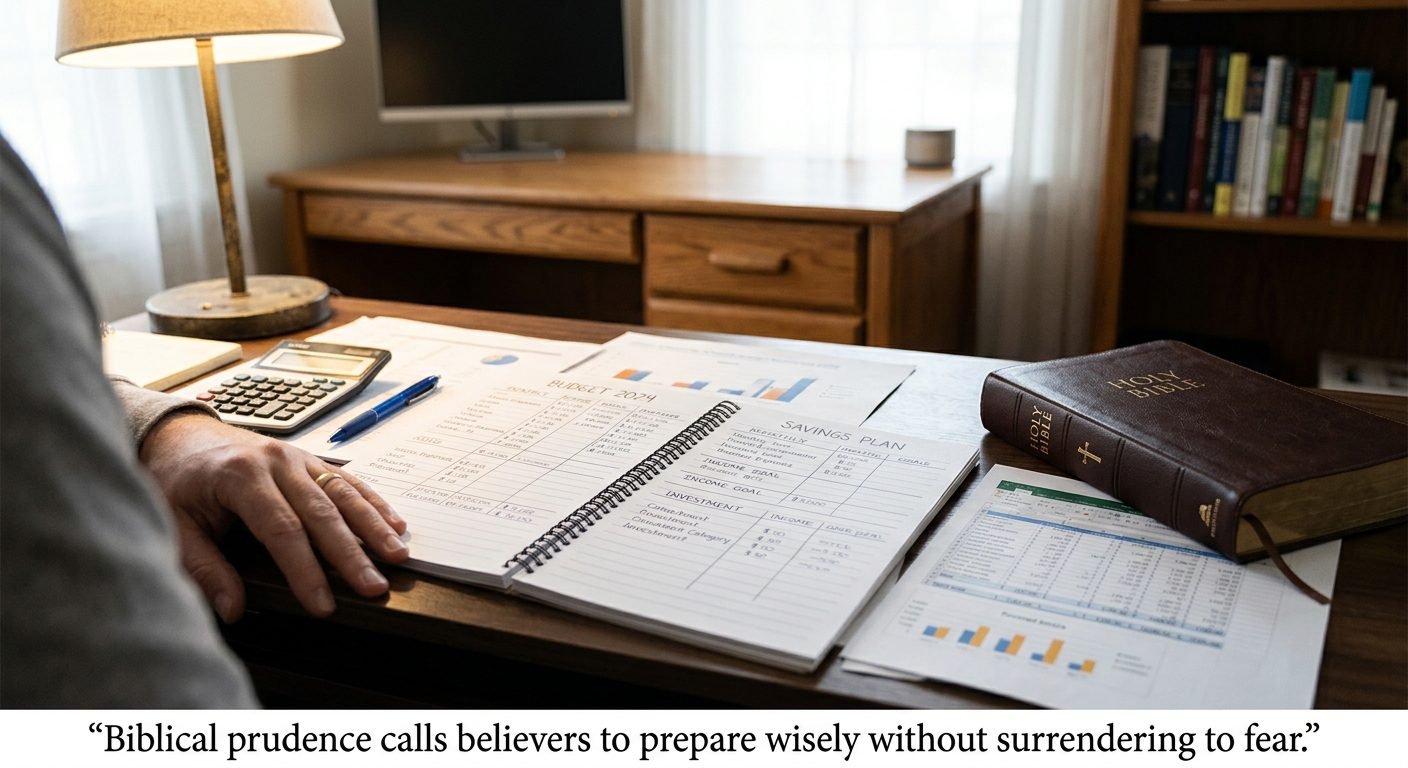
Biblical prudence involves paying attention, considering consequences and acting wisely. It does not require Christians to predict every economic development or react impulsively to every movement in the market.
James 4:13-15 also reminds believers to approach the future with humility. People can make plans, study economic trends and prepare responsibly, but no person can control every circumstance or predict the future with complete certainty.
That perspective is particularly important when markets are volatile.
Financial forecasts can provide useful information, but they should never be treated as guarantees.
For individual Christians, prudence may mean reviewing a household budget, understanding debt obligations, maintaining appropriate savings and seeking qualified financial advice when necessary. It does not mean attempting to predict every move in the Treasury market.
Rising Treasury yields can also influence stocks and other investments.
Government bonds serve as an important benchmark for financial markets. When yields rise, companies may face higher borrowing costs, while investors may reassess the value of investments whose returns depend heavily on profits expected far into the future.
Higher yields can be particularly significant for highly valued companies and businesses that depend heavily on borrowing or long-term growth expectations. Recent Reuters reporting has highlighted the pressure that higher borrowing costs can place on companies during the current AI investment boom.
However, the relationship between bond yields and stock markets is not always simple.
If yields are rising partly because economic growth and investment remain strong, some businesses may continue to benefit from increased demand and higher profits.
This is another reason Christians should approach financial news with discernment rather than alarmism.
A single economic indicator rarely tells the entire story.
Proverbs 18:15 says, “The heart of the discerning acquires knowledge, for the ears of the wise seek it out.”
Seeking understanding is different from reacting to every headline.
Wisdom requires both attention and discernment.
Yet even the most informed economic forecasts have limits. Markets are influenced by countless decisions and circumstances that no analyst, investor or government can fully predict.
Recognizing those limits can help Christians approach financial uncertainty with humility and remember that lasting confidence cannot rest entirely on human systems.
The rise and fall of bond yields serve as a reminder that economic conditions can change.
Interest rates rise and fall.
Markets strengthen and weaken.
Governments and businesses make decisions whose consequences may not become clear for years.
Christians are called to practice responsible stewardship within these changing circumstances, but Scripture also warns against placing ultimate confidence in wealth or human systems.
Psalm 20:7 declares, “Some trust in chariots and some in horses, but we trust in the name of the Lord our God.”
The passage does not encourage irresponsibility or discourage wise planning. Rather, it reminds believers that even the strongest sources of earthly security are ultimately limited.
Financial planning can be valuable.
Saving can be wise.
Understanding economic developments can help families make informed decisions.
But none of these things can provide the ultimate security that belongs to God alone.
Rising bond yields matter because financial markets are connected to everyday life.
Changes in Treasury yields can influence mortgage rates, auto loans, business investment, financial markets and government budgets.
The current rise reflects several overlapping pressures, including inflation concerns, higher energy costs, continued government borrowing, strong corporate demand for capital and geopolitical uncertainty. Recent market reporting has also pointed to stronger economic data and changing expectations about Federal Reserve policy as factors affecting Treasury yields.
For Christians, the appropriate response is neither complacency nor panic.
Economic conditions should be understood honestly.
Financial decisions should be made carefully.
Resources should be stewarded responsibly.
But believers are also reminded that markets cannot provide a permanent foundation for hope.
Hebrews 13:5 offers a deeper source of confidence:
“Never will I leave you; never will I forsake you.”
Bond yields may continue to rise, or they may fall as economic conditions change. No financial forecast can offer absolute certainty.
Yet Christians can respond to uncertainty with wisdom instead of panic, stewardship instead of recklessness and faith instead of fear.
The direction of the bond market may affect the economy, but from a biblical perspective, the direction of a believer’s ultimate hope should remain unchanged.
A bond yield represents the return an investor receives from a bond. Bond prices and yields generally move in opposite directions.
Current increases reflect several factors, including inflation concerns, higher energy prices, geopolitical uncertainty, government borrowing, economic conditions and strong demand for capital.
Yes. Treasury yields influence the broader interest-rate environment, including rates associated with mortgage financing, although mortgage rates are affected by additional market factors.
Christians should take economic developments seriously without responding in fear. Biblical wisdom encourages preparation, discernment and responsible stewardship while recognizing that the future ultimately remains in God’s hands.
Scripture repeatedly encourages wisdom, humility and responsible stewardship while warning against placing ultimate confidence in earthly wealth or human systems. Proverbs 22:3, James 4:13-15 and Psalm 20:7 offer helpful principles.
Walking through faith and culture together. At Faith Focus Journal, we explore economic news and financial uncertainty through the lens of Scripture. Understanding the world wisely can help us live faithfully within it. Reach out through our contact page We would love to hear from you.